Out with the oil, in with the new!
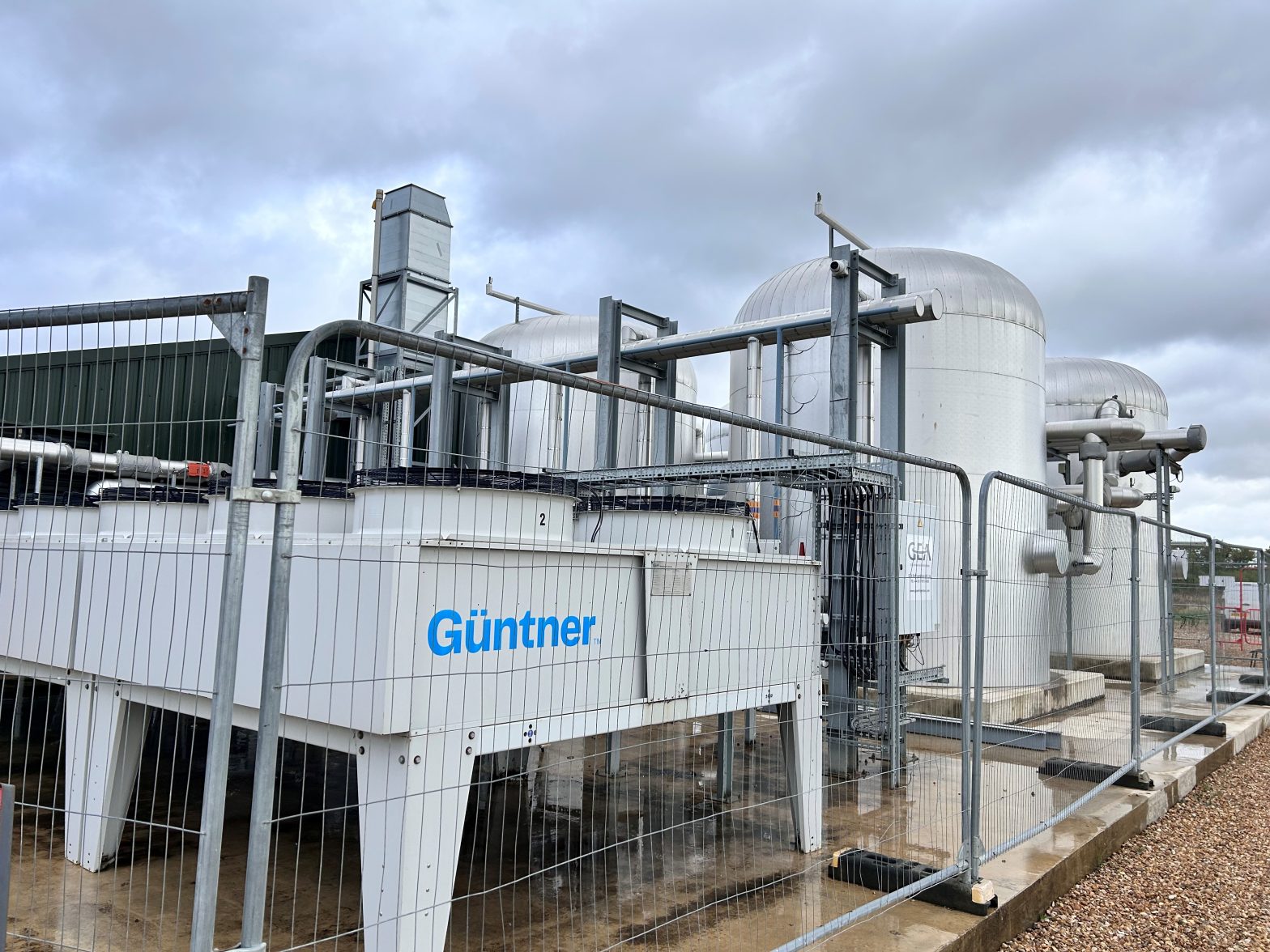
Part of Swaffham Prior Heat Network
A warming look back at our Community-to-Community Workshop with Swaffham Prior Heat Network
What does it take for a rural village to ditch heating oil? At Carbon Copy’s third Community-to-Community Workshop, Sharing the Warmth, host Roy Kareem spoke with Ros Hathorn, a Cambridgeshire county councillor, and Nicola Young, Head of Complex Infrastructure at Cambridgeshire County Council, about Swaffham Prior — home to the UK’s first rural district heating network.
It’s a story that runs from a Community Land Trust‘s early ambitions through boreholes, electric boilers and eight years of careful community relationship-building. Here’s what Ros and Nicola shared, in their own words.
What is the Swaffham Prior Heat Network?
Swaffham Prior is a village of around 300 homes that, like many rural communities, was never connected to the gas grid. For decades, that meant relying on heating oil — expensive, carbon-intensive, and increasingly unpredictable in price. Today, the village is instead served by a district heat network: a shared, council-owned system that generates heat centrally and pipes it directly into people’s homes.
Ros described the appeal simply: the village needed “a way to take those houses off a carbon-based fuel,” and the chosen solution was a heat network built around a network of ground source heat pumps. It’s the first rural place in the UK to successfully implement a district heating system — which makes it worth paying close attention to.
From Community Land Trust to County Council
Ros’s connection to the project predates her time as a councillor. Years earlier, her own village invited a member of Swaffham Prior’s Community Land Trust (CLT) to talk about the project — someone Ros remembers as an “absolute source of energy.” The idea stuck with her long before she became chair of the council’s Environment and Green Investment Committee, the body the heat network now sits under.
The CLT’s ambitions started smaller: first building affordable housing for the village, then, having proved they could deliver, turning to an even bigger question — what next? The timing helped. As Ros put it, “there was a time when there was a bit more financial capacity in local authorities,” and the CLT had both the determination and the knowledge that similar schemes had worked elsewhere. They brought together five partners to drive the idea forward, and the county council stepped in when it was able to commit support and access grant funding to get the project moving.
Inside the energy centre: how the warmth is made
At the heart of the system is an energy centre combining three renewable technologies. Air source heat pumps work alongside a field of 108 closed-loop boreholes — effectively a giant ground source heat pump running underneath the land behind the centre. Four electric boilers provide backup for colder periods or emergencies, and even they run on genuinely renewable power, connected directly to the county council’s own solar farm near Soham.
From there, highly insulated underground pipes carry hot water through the village streets to each connected property. Inside every home sits a heat interface unit — the point where the network’s hot water transfers its heat into the house’s own radiators and taps, delivering, as Nicola put it, “a really nice constant temperature of hot water” without residents needing to think about boilers, tanks or oil deliveries ever again.
Winning hearts (and homes)
Getting local residents comfortable with having their driveways dug up and their heating systems replaced took more than a leaflet drop. The Community Land Trust’s early, direct relationships in the village built the first wave of trust and excitement. From there, the council kept a team member based in the village for face-to-face conversations, ran regular drop-in sessions at the village hall, and answered questions through the village newsletter — building relationships that, by the time of the workshop, stretched back roughly eight years.
That patience mattered because concerns varied enormously: some residents worried about driveway reinstatement, others about whether the new system would really be cheaper or as reliable as oil. Roy offered a neat illustration of why communication itself can matter as much as the technology: when London buses first displayed real-time arrival countdowns, passenger satisfaction jumped — even though the buses weren’t arriving any faster. Just knowing what was happening, and when, gave people back a sense of control. Being a trusted, transparent partner, rather than a perfect one, is what keeps people on side.
No cost barrier: making it fair for everyone
Equity was built into the scheme from day one. “It was about achieving 100% carbon reduction for heating, but also that there would be no cost barrier to join,” Nicola explained — one of the project’s founding principles. Connecting to the network is free, and the main factor determining whether a property can join isn’t income or tenure, but simply its distance from the energy centre. The network now serves a genuine mix of private homeowners, renters and social housing tenants.
For rented and social housing, the heat supply agreement sits with whoever occupies the property at the time, and the council works with social landlords to brief incoming tenants when they move in. Ros also floated an idea worth borrowing elsewhere: using pricing creatively as an incentive, such as offering free connection periods on specific streets to encourage early sign-ups — treating low or zero-cost entry as a genuine recruitment tool, not just a fairness box to tick.
What they’d do differently
Nicola was candid about what she’d approach differently with hindsight. One is the connection strategy: rather than signing up houses in whatever order people applied, grouping new connections by geography makes the disruptive civil works — digging up streets — far more efficient to deliver in batches.
Another is right-sizing the system to actual demand. The energy centre was built to serve up to 300 properties, roughly 90% of the village, but with around 112 connected so far, the team is now looking at adjustments to make the plant run efficiently at current, lower volumes rather than at its full designed capacity.
The last, and perhaps most important, lesson was about honesty when things slow down. Large infrastructure projects inevitably take longer than hoped, and enthusiasm from the early days can fade if delays go unexplained. “Being really clear and transparent… really helps to bring people on the journey with you,” Nicola said, “because we’re all learning as we have developed this fantastic scheme.”
Is this replicable?
Nicola isn’t aware of another council currently delivering a rural heat network quite like this one, though enquiries come in regularly from other local authorities, community energy groups and academics keen to learn from Swaffham Prior’s experience. Audience members in the workshop mentioned similar ambitions taking shape in North Yorkshire and Devon — interest that we predict will only grow after this session!
Ros was clear that copying Swaffham Prior doesn’t mean building an identical heat network everywhere. “It’s not replicating the same thing,” she said. “It’s using the essential core principles — what we learned — and where there’s an opportunity, applying those in a way that’s most appropriate to that opportunity.” She pointed to a very different project already borrowing those lessons: a new Cambridge development pairing solar panels with charging infrastructure for electric waste disposal vehicles — a project that still starts from the same questions of who the customer is and what they actually need.
The biggest barrier beyond any single council’s control is instability in national energy policy. Local government reorganisation and shifting national decisions, Ros noted, make it harder for councils to take the long view that infrastructure like this requires — meaning projects succeed partly by learning to move within a bigger system they can’t control.
Get involved
Huge thanks to Ros Hathorn and Nicola Young for sharing such an honest, detailed picture of what it actually takes to deliver infrastructure like this — the vision, the patience, and the years of relationship-building behind a project most residents simply experience as a warm, reliable home.
Watch the full event recording below, and keep an eye out for the upcoming Carbon Copy Podcast episode featuring Ros, Nicola and others involved with the heat network.
Recommended from Carbon Copy
-
Finding the plot
How did Hull become the first place in the UK with a legal Right to Grow? What does it actually…
-
Refuse, reduce, repair, repurpose, recycle – recap!
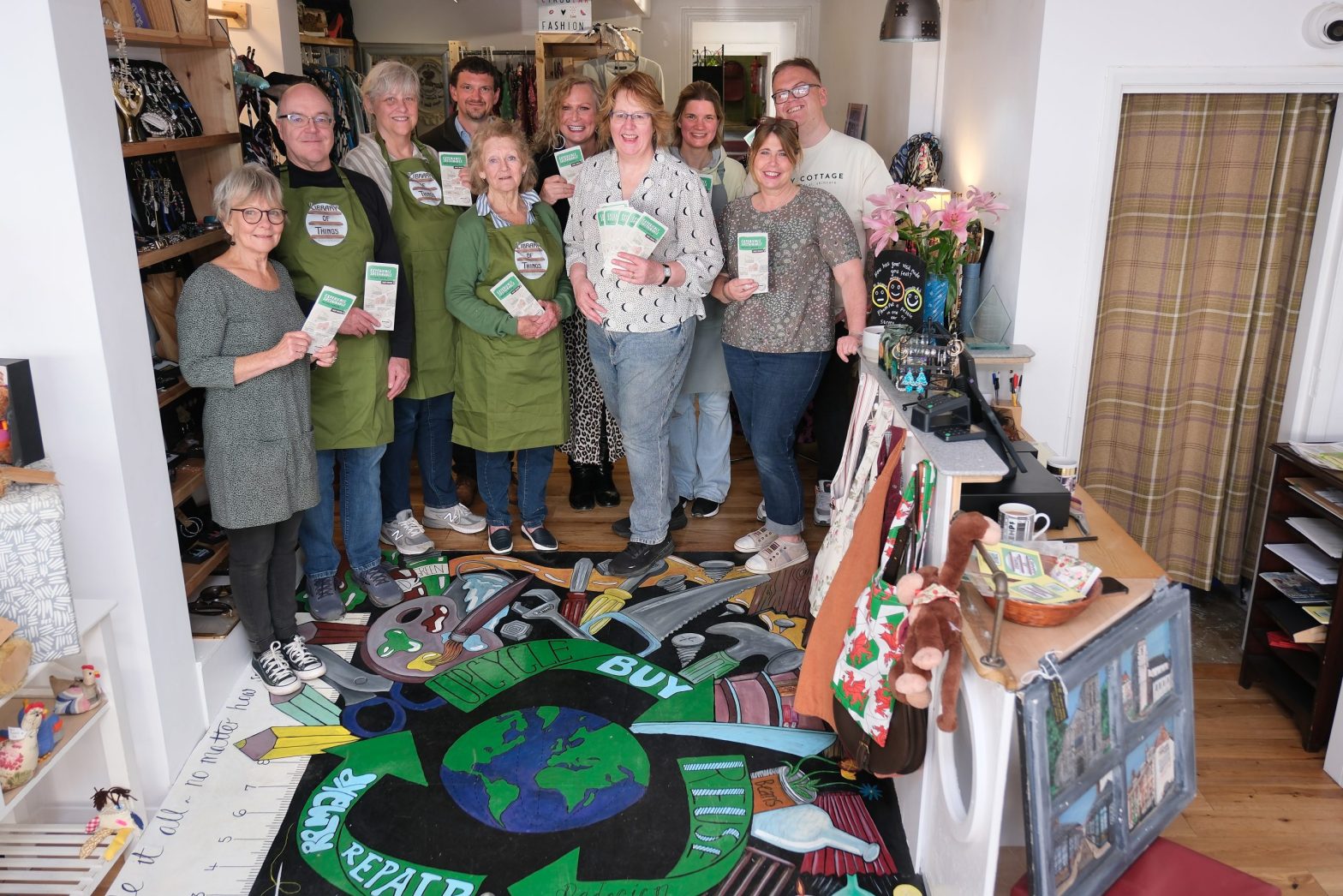
Circling back to our Community-to-Community Workshop with Circular Malton & Norton How long does it take to move people to…
-
From Footprint to Changeprint is making an impact
How do some local climate initiatives achieve remarkable impact? We think we have some of the answers. When Carbon Copy…
-

From Roots To Riverbanks
How joining up individual nature projects has much bigger benefits for communities and nature. Local nature-based solutions at a landscape…