Healthcare is a climate story
Healthcare is a conundrum: how can an industry built to protect health be less polluting and better for our health?

The Green Health Partnership is supporting people to feel better through a range of activities including community gardening, nature walks and gentle sports.
Healthcare and climate change are closely connected. The sector exists to protect our health, but healthcare is also a significant source of greenhouse gas emissions, responsible for up to 4.4% of global net emissions. That’s what makes healthcare a fascinating climate story, playing out at two ends of the system: nature helping us to be well enough that we potentially need less treatment, and making treatment itself far more efficient.
Green social prescribing and sustainable healthcare
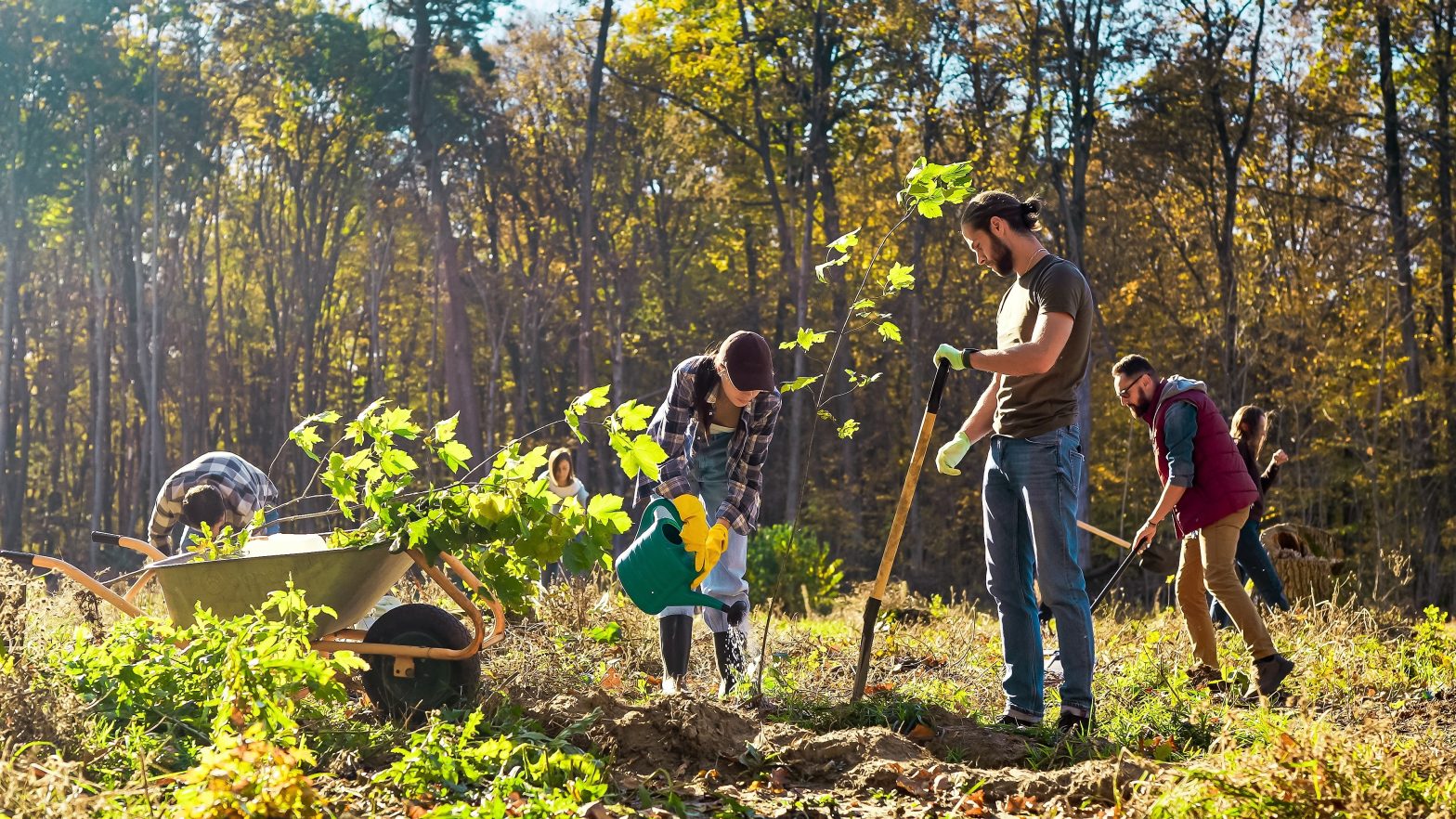
Green Social Prescribing connects people to nature-based activities — gardening, wheeling and walking groups, conservation work or simply meditating in green or blue spaces — as a non-clinical alternative or complement to medical treatment. This is not a fringe idea. The National Academy for Social Prescribing (NASP), reporting on the cross-Government Green Social Prescribing Programme (2020–2024), calculated that for every £1 invested by central government, the programme has generated a social return on investment of up to £2.42. The programme was targeted to support people who were most in need, with more than 50% of participants from the most socio-economically deprived areas.
The climate benefit of this approach is twofold. Pharmaceuticals are the single largest component of the NHS’s carbon impact, and one survey found that 60% of GPs would prescribe antidepressants less often if alternatives existed. So keeping people well through nature reduces demand on a carbon-heavy supply chain. And many of these projects also benefit the environment directly: community gardens mean more locally grown food and fewer air miles; tree planting adds biodiversity and carbon capture.
Cynon Valley Organic Adventures in Abercynon is a great illustration — a five-acre social enterprise site of river, wet woodland, orchard and polytunnels that started as neglected land in 2018 and now runs green social prescribing alongside education and volunteering.
Our Health Meadow at University Hospital Llandough takes it further by building green infrastructure into the hospital itself — an edible landscape and outdoor rehabilitation facility designed to test how nature affects mental health and social cohesion in a clinical setting, not just a community one.
Dundee’s innovative Green Health Partnership has delivered measured improvements in people’s mental and physical health from taking part in an array of enjoyable and sociable activities in green spaces, alongside more traditional methods. Their innovative pathway was co-designed in partnership with community groups, NHS Tayside and third sector nature-based interventions.
How hospitals can reduce healthcare emissions and waste
The other half of this story is what happens when care is delivered. Kidney care is a good example, one of the most resource-intensive specialities in healthcare, making it a key area for improvement while continuing to deliver the best outcomes for patients.
Recognising this, the Centre for Sustainable Healthcare is leading a pioneering two-phase initiative to reduce the carbon footprint of kidney care across the NHS while delivering cost savings, conserving water and continuing to deliver high-quality care.
Reducing waste is another vital opportunity. NHS operating theatres alone generate up to 70% of hospital waste, costing roughly £2.8 billion a year — and that waste has been rising 15% annually, driven by growing reliance on disposables. It is one of the principal areas of focus in the NHS’s long-term planning.
The Reducing Clinical Waste story published on Carbon Copy is one innovative example of what circular thinking looks like in practice. At Wrexham Maelor Hospital, consultant surgeons Preetham Kodumuri and Edwin Jesudason redesigned carpal tunnel surgery — the UK’s most common orthopaedic procedure — around a ‘lean’ instrument set, smaller surgical drapes, a small procedure room instead of a full theatre, and a ‘green patient pathway’ that cut a patient’s time on-site from roughly five hours to about 30 minutes!
The results from their pilot (17 patients, two hospitals, no complications) were impressive:
- 65% reduction in clinical waste
- 80% reduction in carbon emissions
- 65% cost saving — £12,641 annually per hospital
- Freed-up theatre time for bigger procedures, and no ward admission needed
These innovative surgeons didn’t present their idea to the hospital as an environmental project – they sold it on cost savings, freed-up theatre time, and better patient experience. Carbon reduction was a welcome addition to solving problems the NHS and patients already care deeply about: cost, waiting times and patient experience.
These are just a few examples of how a climate story can be about lots of things and can create wider positive impacts, beyond a reduction in emissions.
Discover more climate stories like these to inspire you at carboncopy.eco/initiatives.
How does healthcare contribute to climate change?
Healthcare contributes to climate change through greenhouse gas emissions associated with medicines, medical equipment, buildings, energy use, transport, supply chains and waste. Globally, healthcare is estimated to account for around 4.4% of net greenhouse gas emissions. Reducing this impact involves looking at how healthcare is delivered while continuing to prioritise patient safety and quality of care.
What is sustainable healthcare?
Sustainable healthcare aims to deliver high-quality care while reducing unnecessary environmental, financial and resource impacts. This can include cutting waste, using energy and water more efficiently, reducing emissions from medicines and supply chains, and redesigning services where appropriate. Some sustainable healthcare initiatives can also deliver financial savings and improve the experience of patients and staff.
What is green social prescribing?
Green social prescribing connects people with nature-based activities that can support their health and wellbeing. Activities might include community gardening, walking or wheeling groups, conservation projects or spending time in green and blue spaces. It forms part of the broader social prescribing approach, which connects people with community activities and support based on their individual needs.
How can the NHS reduce its carbon footprint?
The NHS can reduce its carbon footprint through changes across buildings, transport, medicines, procurement, clinical practice and waste management. Healthcare teams can also examine individual pathways to identify opportunities to use fewer resources without compromising patient care. Projects highlighted by Carbon Copy show how changes to areas such as kidney care and surgery can reduce waste and emissions while delivering wider operational benefits.
Why is reducing clinical waste important for sustainable healthcare?
Reducing clinical waste can lower the resources and emissions associated with producing, transporting and disposing of healthcare products. It can also reduce costs for healthcare providers. Approaches can include reviewing disposable products, using appropriately sized surgical packs and identifying where equipment or resources can safely be reused or avoided, while maintaining infection control and patient safety requirements.
Recommended from Carbon Copy
-
From Footprint to Changeprint is making an impact
How do some local climate initiatives achieve remarkable impact? We think we have some of the answers. When Carbon Copy…
-

From Roots To Riverbanks
How joining up individual nature projects has much bigger benefits for communities and nature. Local nature-based solutions at a landscape…
-

Empty supermarket shelves is a climate story
How can local action help us avoid food shortages and reduce the risk that climate poses to food security in…
-

Inspiration At Your Fingertips
What do all of the following have in common? Native Architects’ new low carbon office, built using locally-grown hemp, straw,…