Empty supermarket shelves is a climate story
How can local action help us avoid food shortages and reduce the risk that climate poses to food security in the UK?
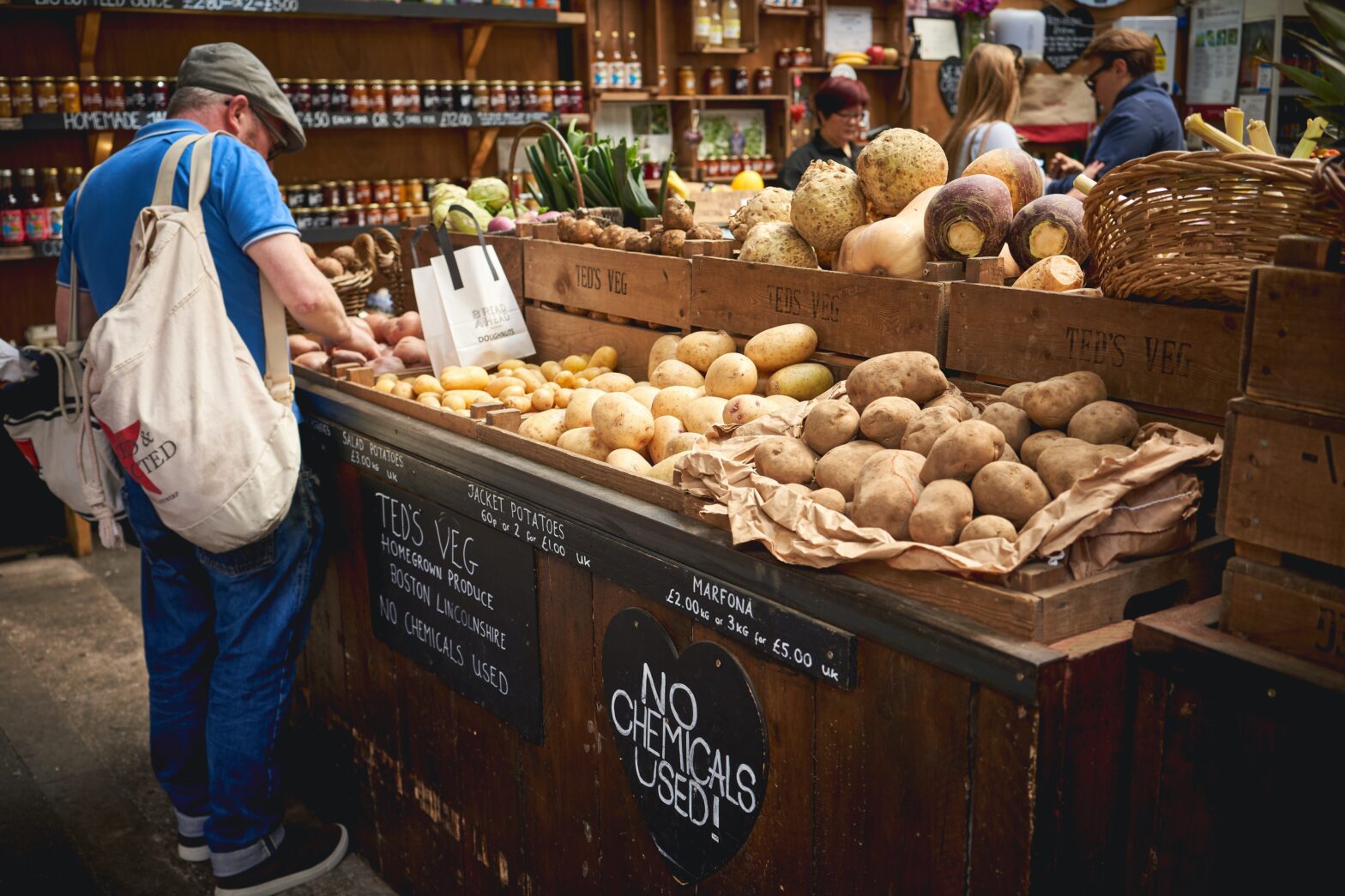
Locally grown food is less impacted by global supply chain issues
How is climate change affecting food security in the UK, and could stronger local food systems help reduce the risk of future food shortages and empty supermarket shelves?
The image is seared into recent memory: early 2023, and British supermarkets were rationing tomatoes, peppers, cucumbers and courgettes — two or three items per customer. Social media filled with photos of bare shelves where salad vegetables should have been. The official explanation was “adverse weather conditions in southern Europe and north Africa.” Which was true, as far as it went, but that wasn’t nearly far enough.
The supply chains behind British food are climate-exposed. The UK imports 45 to 50 per cent of its food, and the proportion rises sharply in winter when domestic growing capacity falls. British supermarkets are dependent on growing regions like southern Spain, Morocco, Portugal and Italy which are now experiencing some of the most rapid climate deterioration in the world. The Mediterranean basin is warming about 20 per cent faster than the global average. Once-in-a-generation droughts now arrive every few years.
The 2023 shortage wasn’t a unique event. It was a preview of what’s coming. And it’s not just an import problem: UK domestic production is also increasingly exposed. Our 2023 wheat harvest was one of the worst on record — a wet, cold spring delayed planting, a difficult summer compounded the damage, and yields fell sharply. That fed directly into higher flour and bread prices. In 2024, the UK experienced its wettest 18-month period since records began. Farmers couldn’t get machinery onto their water-logged land at the right time and some crops simply rotted in the ground.
Due to unseasonal frosts and unpredictable rainfall, the growing window that farmers and supermarket buyers plan around is becoming less reliable. That also creates gaps: not always empty shelves, but reduced availability, higher prices, and more imported substitutions precisely when domestic supply should be at its peak.
Why climate change puts UK food security at risk
Modern supermarket supply chains are engineered for efficiency, not resilience. Just-in-time logistics, minimal stockholding, tight supplier contracts — these worked well when conditions were stable and predictable. Now they are neither. What we saw in 2023: empty bays and rationing notices within days of harvest failures we’d never even heard about, is not just a logistics failure or a supermarket problem but a climate impact, arriving in the most visible way possible — in our weekly shop.
How serious is it? A national security assessment by the UK’s Joint Intelligence Committee (JIC) in January 2026 warns that global ecosystem collapse is likely to trigger severe food shortages in the UK within five years. Professor Paul Behrens, British Academy Global Professor at the Oxford Martin School, has delivered this stark food security warning in The People’s Emergency Briefing, now being screened in local communities all over the UK:
“One estimate suggests that about a third of the food price inflation that we saw in 2023 was driven by extreme weather events that are now becoming the norm. And when families can’t afford to feed their children, societies break down.
“The good news is that the research is crystal clear on what we need to do, and fortunately, it’s healthier for us. We need a great food transformation, built on four main pillars: shifting to plant rich diets; reducing food waste; improving production and increasing climate resilience”.
How local food systems can improve food security
The risks facing the UK’s food supply are real and growing, but communities across the country are already finding ways to build greater local food resilience. Growing more food locally, shortening supply chains, improving soil health and sharing food-growing knowledge can all help communities become less dependent on vulnerable global supply chains.
These aren’t distant pilot programmes or government initiatives. They’re local people deciding to tackle the risk of food shortages head-on, right now.
Middle Ground Growers at Weston Spring Farm in Bath are using regenerative farming to grow fresh food for local people all year round. Started in 2020 on just 2 acres in Bathampton, the project now farms 16 acres and supplies food to over 200 families and 12 local outlets. Their model — short supply chains, soil health, no fossil-fuel fertilisers — is precisely the antidote to the vulnerabilities that caused 2023’s empty shelves. They’re also part of We Are Avon, a growing network of producers and communities collaborating to build better local food systems across the region.
Fordhall Farm in Shropshire is England’s first community-owned farm, run through a charitable community benefit society with over 8,000 community shareholders, 30 staff, and more than 100 volunteers. Their model — community as landlord, farmer as tenant, nature as partner — shows what food resilience looks like when it’s rooted in place rather than global logistics. Charlotte Hollins, who alongside her brother Ben helped save the farm, now offers consultancy to other community groups wanting to follow the same path.
Lincoln Greeners is a community urban gardening group run by Leeds-based CIC Mafwa Theatre. Participants decide together what to grow, follow the whole process from seedling to harvest, and share skills and knowledge along the way. The group has been welcoming to all, including support for people on lower incomes to attend, and has helped to create lasting friendships among participants who might otherwise be socially isolated. It’s a reminder that food resilience isn’t only about supply chains — it’s about the knowledge and connections that support communities.
Can local food systems help prevent food shortages?
Short supply chains. Soil that works with nature, not against it. Community ownership and knowledge. Food that doesn’t depend on a harvest in Morocco or a gas price in Rotterdam. These vital projects are all prototypes for a UK food system that can actually withstand what’s coming. The question isn’t whether this is possible; it’s already happening. The question is scale. Can you join in to help build that scale where you live?
Refilling empty shelves is just one example of how a climate story can be about lots of things and can create wider positive impacts, beyond a reduction in emissions.
Discover more climate stories like these to inspire you at carboncopy.eco/initiatives.
How does climate change affect food security in the UK?
Climate change affects UK food security by making food production and supply chains less predictable. Extreme heat, drought, flooding, heavy rainfall and unexpected frosts can all reduce crop yields or disrupt growing seasons. The UK also imports a significant proportion of its food, meaning extreme weather overseas can affect the availability and price of food in British supermarkets. Domestic farming faces its own climate risks, so greater resilience is needed across both UK production and international supply chains.
Can climate change cause food shortages in the UK?
Climate change can contribute to food shortages in the UK when extreme weather affects crops, transport or the regions from which Britain imports food. This doesn’t necessarily mean supermarkets will regularly run out of food altogether. Disruption can also appear as shortages of particular products, reduced choice, higher prices or greater reliance on alternative imports. The supermarket shortages seen in 2023 showed how quickly problems in major growing regions can become visible to UK consumers.
Why does the UK import so much food?
The UK imports food for several reasons, including climate, seasonality, consumer demand and the economics of modern food supply chains. Imports allow supermarkets to stock products that cannot be grown domestically, or cannot be produced in sufficient quantities throughout the year. However, reliance on overseas growing regions can leave the UK exposed when droughts, floods, extreme temperatures or other disruption affect production abroad.
How can local food production improve food security?
Local food production can improve food security by shortening supply chains and reducing reliance on a small number of distant growing regions. Diverse local food systems can also keep more money within communities and help people develop food-growing knowledge and skills. Projects such as community farms, regenerative farms and urban growing initiatives demonstrate different ways communities can strengthen their local food systems.
What is food resilience?
Food resilience is the ability of a food system to continue providing sufficient food when it experiences disruption or changing conditions. A resilient food system is better able to respond to pressures such as extreme weather, crop failures, transport disruption or changes in global supply chains. Building resilience can involve diversifying where food comes from, supporting local production, improving soil health, reducing food waste and strengthening knowledge and connections within communities.
Recommended from Carbon Copy
-
Take a leaf out of this book: just say yes!
How Harborough Woodland community group in South Leicestershire focused on nature-based solutions to connect everyone, from kids to corporates, with…
-

Out with the oil, in with the new.
A warming look back at our Community-to-Community Workshop with Swaffham Prior Heat Network What does it take for a rural…
-

Healthcare is a climate story
Healthcare is a conundrum: how can an industry built to protect health be less polluting and better for our health?
-

Inspiration At Your Fingertips
What do all of the following have in common? Native Architects’ new low carbon office, built using locally-grown hemp, straw,…