Closing the Loop
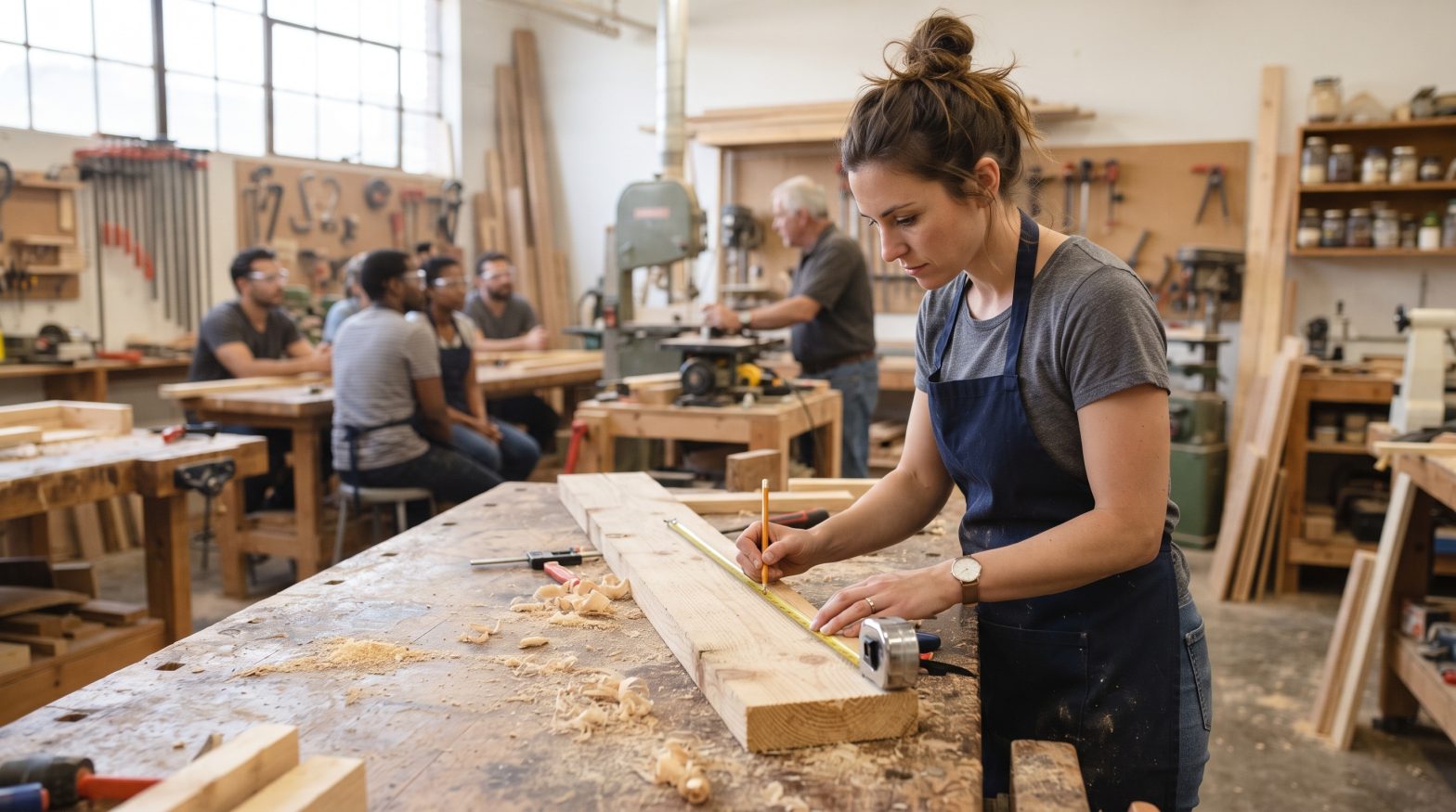
How you can take a local economy full circle.
A local circular economy keeps products, materials and resources in use for longer through repair, reuse, sharing, resale and recycling. Instead of valuable resources becoming waste, communities can create local systems that keep them circulating, supporting local businesses and jobs while reducing waste and environmental impact.
From repair cafés and tool libraries to refill shops, community composting and second-hand marketplaces, many of the building blocks of a circular economy already exist in communities across the UK. The opportunity is to connect them and create a stronger local system.
What is a circular economy?
In a circular economy, products and materials are kept in use for as long as possible through processes such as repair, reuse, remanufacture, recycling and composting. This reduces the need to continually extract new resources and prevents useful materials from becoming waste.
This is very different from the dominant ‘take-make-waste’ economy of today, where raw materials and natural resources are extracted, used once and then discarded as waste.
Most of us think that a circular economy is about eliminating waste and pollution, and we would be right. But there’s another, equally important element. By shifting from a take-make-waste linear economy to one that is circular, we also support natural processes and regenerate nature.
For example, food production based on circular economy principles involves moving away from soil extraction and towards soil regeneration. Regenerative food production practices reduce the need for polluting fertilizers, fossil fuels and pesticides to boost crop yields, relying instead on healthy soils to grow more food.
Circular economies can work particularly well at a local level because many of the activities that keep resources in use, including sharing, repairing, reusing and recycling, benefit from being close to the people and businesses using them. In contrast, take-make-waste economies often use cheap global shipping to extract raw materials in one country, manufacture products in another and dump waste in a third.
What are the benefits of a local circular economy?
Underpinned by the transition to renewable energy and its positive impact on nature, a local circular economy is a resilient system that is good for people, place and the surrounding environment. Benefits include:
Stronger Local Jobs: Sorting, upcycling and remanufacturing create steady jobs that cannot be easily outsourced overseas or replaced by AI.
Affordability: Extending product lifespans, easier access to repair, using goods instead of buying them, all act as money savers.
Less Waste: Reducing waste is an issue people feel very strongly about. Public polling shows how much people in the UK hate waste and how ready they are for greater ambition on using resources more efficiently.
Community Building: Tool libraries, clothing swaps, and local food composting systems rely entirely on nearby neighbourhoods and people working together.
Community Wealth: The money spent and benefits circulate locally within the community and with local businesses, rather than leaking out to multinational corporations.
Supply Security: Reduced reliance on global imports, long supply chains and exposed international shipping routes lowers the supply risks and price volatility.
Reduced Emissions: Extending product usage cuts carbon emissions from raw manufacturing, and keeping reuse and recycling networks local cuts polluting transport emissions.
Nature Replenishment: Reducing waste, pollution and emissions all help in restoring local water, soil and air quality as well as the environment more generally for both people and wildlife.
What does a local circular economy look like?
A local circular economy isn’t one individual project or business. It’s a network of organisations and services that help people keep products and resources in use for longer. Repair cafés, tool libraries, second-hand retailers, refill shops and composting projects can all form part of the same local circular economy. They can be grouped based on what they do and together they grow into a comprehensive and thriving circular economy:
Maintenance, repair and refurbishment: These organisations focus on extending the useful life of products, keeping items functioning so people don’t have to purchase brand-new replacements. Repair Café Wales, for example, supports a network of 150 individual repair cafes across Wales. Electronics refurbishers such as Fixing Factories repair small household appliances and electronics, helping to tackle e-waste. Community tool libraries like Edinburgh Tool Library act as local hubs where people not only share tools but also have tools repaired. Craft-based businesses – cobblers, tailors and furniture upholsterers – extend the lifespans of favourite footwear, clothing and expensive furniture.
Sharing and providing ‘products as a service’: Instead of buying a new bike or car or piece of equipment, people share or pay to use these products for the service they provide and for a limited time only. This maximises the use of these products while incentivising the owners to maintain them to increase their lifecycle. Library of Things have hubs across London, enabling locals to borrow a variety of things related to DIY, cleaning, gardening and more. Devizes Swap Shop and other sharing hubs are places to swap items within the local community, from toys to sports equipment. Local transit operations such as TrydaNi Car Clubs allow multiple users to share a single fleet of vehicles, providing people in rural areas with access to a car without the cost of owning one. Zero-waste and refill shops require customers to bring containers with them, sharing their containers with the retailer to eliminate single-use packaging in the outlet.
Reuse, resale and redistribution: These operations help maintain and grow the second-hand market, transferring ownership of unwanted but perfectly functional goods to new users. Charity shops and vintage retailers on the high street are very popular examples, with Charity Super.Mkt growing into a multi-brand department store for all things charity fashion. Upcycling workshops run by artisans and small manufacturers transform unwanted products into higher-value items (e.g. New 2 You turns old furniture items into interesting new pieces). Renew Hub is an example of a local marketplace that supports resale of used goods, helping people to reuse donated and discarded items on a huge scale across Greater Manchester. More generally, local scrap yards, second-hand building centres and salvage shops recover raw materials and reclaim functional parts, for reselling and redistribution.
Organic recycling and regeneration: These operations safely return biological materials back to nature, helping to restore local ecosystems. Facilities with commercial composting facilities or anaerobic digesters collect local restaurant and household food scraps, converting them into biogas for energy and nutrient-rich fertiliser for local agriculture. For example, the Humberston Eco Conservation Centre uses a novel micro anaerobic digester to create bio-energy from local garden and food waste.
How can you build a local circular economy?
Building a local circular economy doesn’t necessarily mean starting everything from scratch. Your community may already have repair cafés, reuse projects, sharing schemes, second-hand businesses or recycling initiatives that form some of the building blocks. The next step is to understand what’s already happening locally, identify the gaps and find opportunities for organisations to work together.
Every local circular economy will look different because it needs to reflect the resources, businesses and needs of the community. However, there are common approaches and lessons that communities can learn from one another.
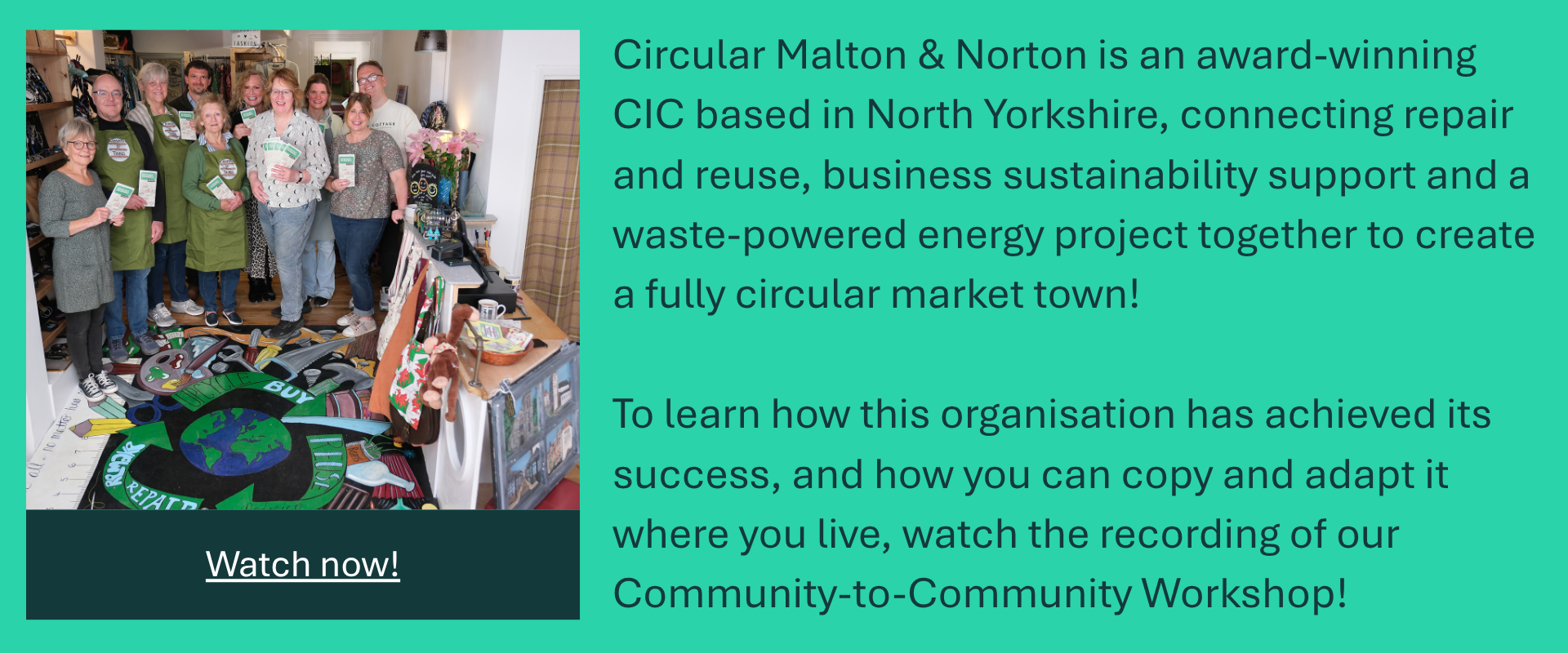
On 29 September 2026, we hosted an online workshop with Circular Malton & Norton. In Closing The Loop, we explored how these elements come together in practice and effective ways of collaborating across an entire system.
To watch the recording of this Community-to-Community Workshop about expanding your local circular economy, click here.
What is the difference between a linear and circular economy?
A linear economy follows a take, make and waste model, where resources are extracted, turned into products and eventually discarded. A circular economy aims to keep products and materials in use for longer through repair, reuse, sharing, refurbishment, remanufacturing and recycling. This reduces waste and the demand for new raw materials.
What are some examples of a circular economy?
Circular economy examples include repair cafés, tool libraries, refill shops, community composting schemes, second-hand marketplaces and businesses that refurbish products. Car clubs and other sharing schemes can also contribute by allowing more people to use the same products rather than everyone owning their own.
How does repairing and reusing products help the environment?
Repairing and reusing products extends their useful life, reducing the need to manufacture replacements and preventing usable materials from becoming waste. This can reduce demand for raw materials and the energy and resources involved in manufacturing new products.
Can a circular economy support local businesses?
A local circular economy can create opportunities for businesses involved in repair, refurbishment, resale, sharing and resource recovery. Keeping products and materials circulating locally can also help more economic activity remain within the community.
Recommended from Carbon Copy
-
From Footprint to Changeprint is making an impact
How do some local climate initiatives achieve remarkable impact? We think we have some of the answers. When Carbon Copy…
-

From Roots To Riverbanks
How joining up individual nature projects has much bigger benefits for communities and nature. Local nature-based solutions at a landscape…
-
 Affordable Energy, Buildings & Places, Greater Fairness, Health & Wellbeing, Renewable Energy, Strong Communities
Sharing the Warmth
How communities like yours could benefit from district heating systems. District heating systems, also known as heat networks, provide heating…
-

Local projects lead the way for others to create lasting positive change
We’re launching an innovative pilot series of Commmunity-to-Community Workshops to catalyse local climate action. With generous support from the National Lottery Community Fund,…