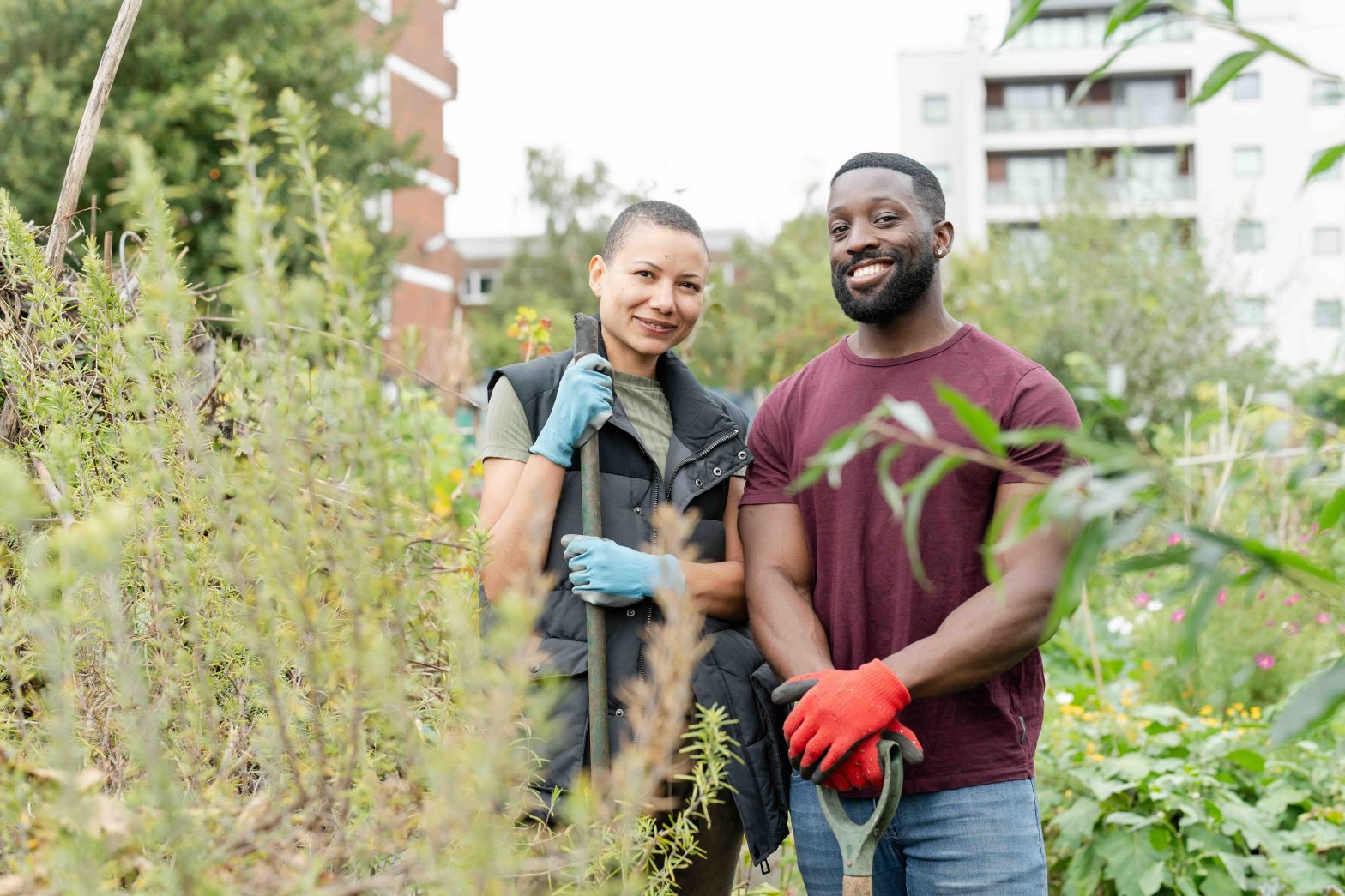
How can climate and nature projects tap into people’s sense of belonging to create a bigger impact locally?
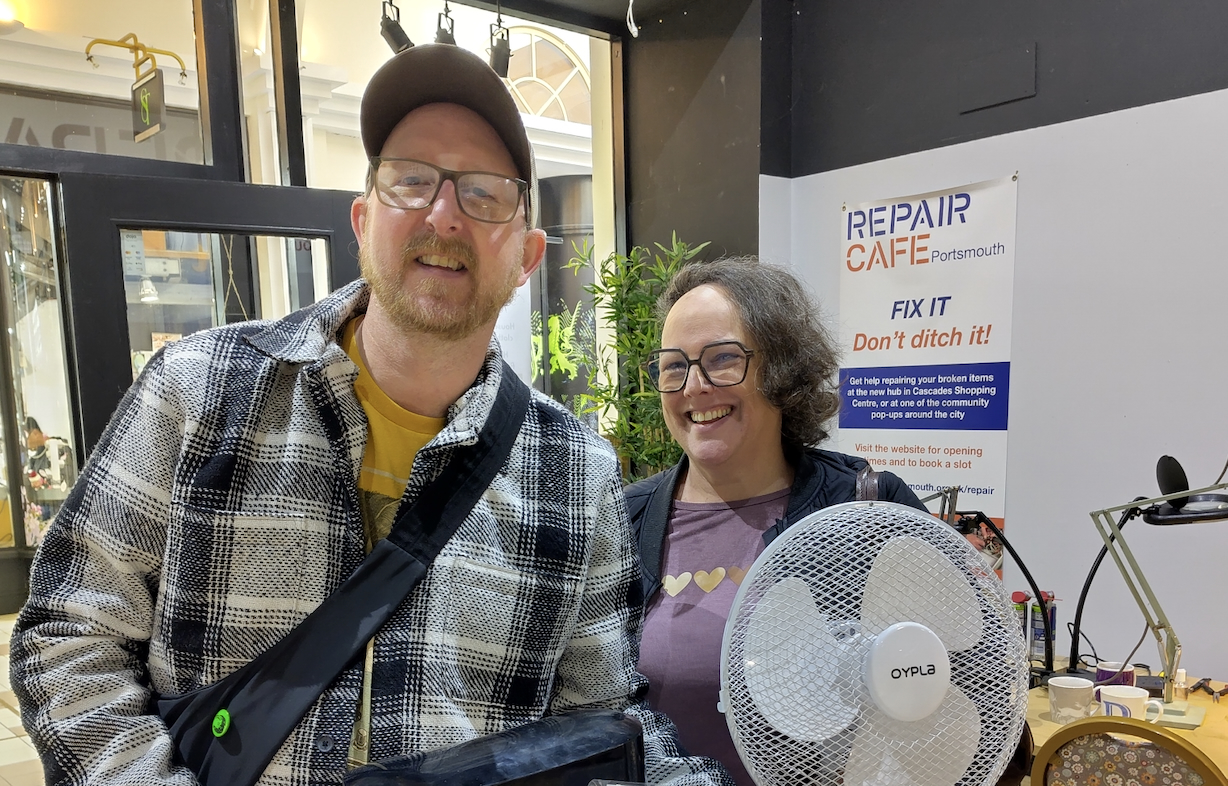
Photo credit: Share (Portsmouth)
It’s surprising when you think about it. Unlike ‘patriotism’, for feelings of loyalty and attachment towards our nation as a whole, there isn’t a similar word in the English language which describes loving, supporting and belonging to the place where we live.
Surprising, because the powerful emotional connection of belonging is vital to our own personal happiness and wellbeing. And, as our new research confirms, it also helps to drive the effectiveness of whatever we do when we work together in our community.
We at UK charity Carbon Copy asked Eunomia to undertake a deep review, qualitative and quantitative, of successful local climate and environment projects across the UK.
Based on that research, we came up with a new, positive and forward-looking description of the impact of these collective local projects. We call it their Changeprint.
In contrast to the negative and reductive focus of ‘carbon footprint’, Changeprint describes all the positive benefits of collective local action beyond carbon reduction – economic, health, social, educational and cultural – that also contribute towards greater fairness and a better place to live.
This new groundbreaking report, ‘From Footprint to Changeprint’, reveals three core characteristics of successful local projects – a mindset of Abundance, a strong sense of Belonging and a Purposeful approach. The power of each of these characteristics derives in turn from four success factors, also identified in the research.
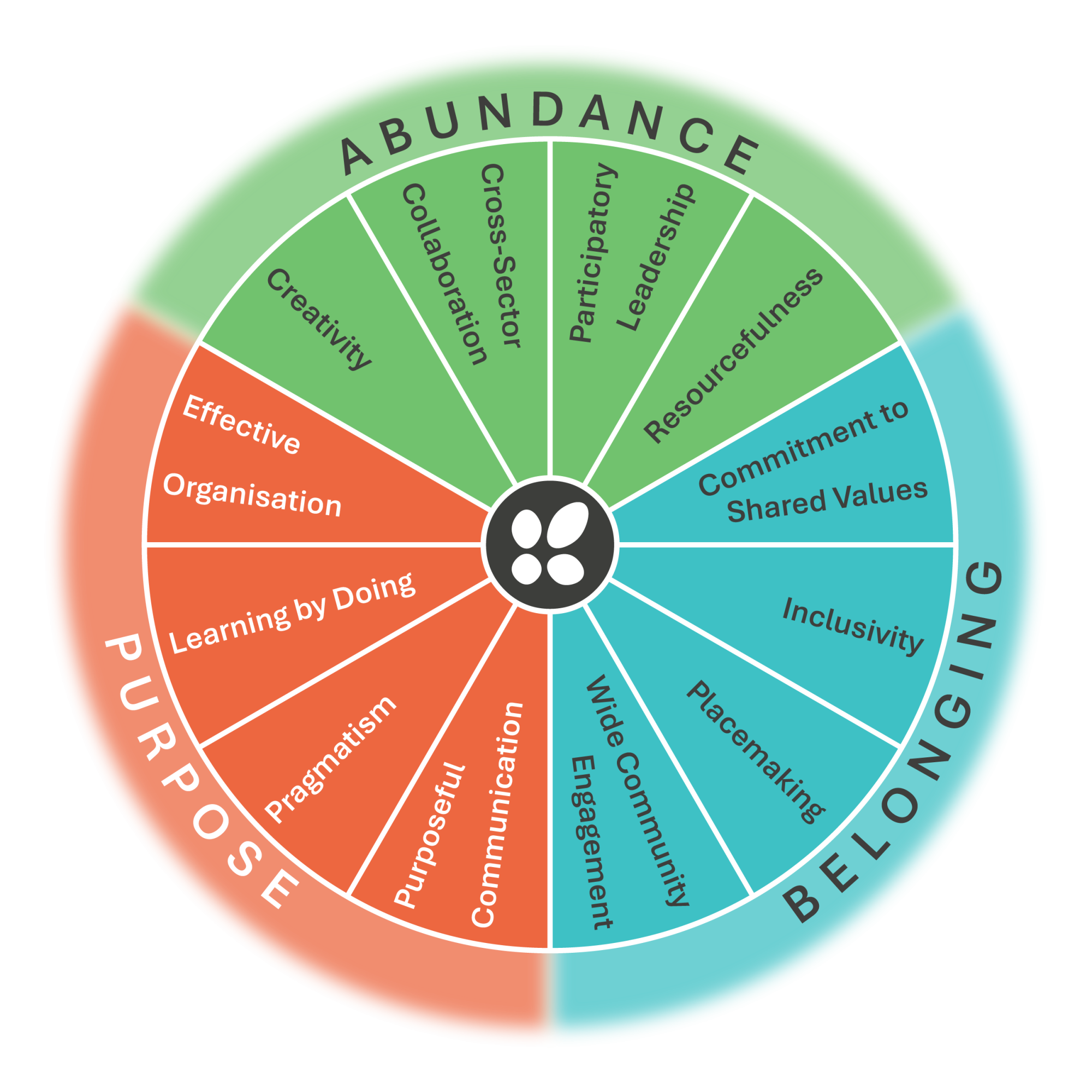
In other blogs, I explored the mindset of Abundance and taking a Purposeful approach; today we’ll focus on that all-important sense of Belonging.
Why is it vital to success? Belonging is more than just being part of a group – it’s fundamentally tied to our social identity, our shared beliefs and ideals. As Dr Tracy Brower explains in Forbes magazine, this need for a sense of belonging, of unity and sharing among members of our group, is a fundamental part of being human. It’s hardwired into our brains – literally, as it turns out!
“A recent MIT study found we crave human interaction in the same region of our brains where we crave food,” she writes, “while another study showed we experience social exclusion in the same region of our brain where we experience physical pain.” That certainly helps to explain the power of collective climate and environment projects which satisfy that need in us.
Our research identifies four essential dimensions that nurture this sense of Belonging. The first is wide community engagement with diverse community groups. This leads to high levels of participation and awareness, and ensures projects reflect community needs while building trust and shared ownership. Over time, this engagement nurtures the social infrastructure that enables projects to grow, have greater impact and become self-sustaining.
Commitment to shared values is the second vital factor: a common understanding and acknowledgement among participants that action on the climate and environment is critical, urgent and has tangible, wider community benefits. By helping communities to feel informed about the issues at stake, see the action taken and experience the benefits, working together unites and inspires people around a shared purpose.
The third, inclusivity, is all about projects reflecting the needs, experiences, and viewpoints of the communities being served, with particular attention to vulnerable groups. Active representation of all community voices ensures outcomes are as beneficial as possible for the entire community.
The fourth success factor, placemaking, describes the shared sense of belonging and pride in ‘our place’, where communities create physical spaces to come together, get involved, and provide a focal point for project activity. They act as catalysts for different stakeholders to act as one community, with cross-cultural interaction and long-term involvement. These places might be community hubs, council buildings, repair cafés, libraries, tipis, visitor centres, or repurposed buildings such as pubs and community rooms. As well as being practical activity venues, they are also symbolic anchors that help build identity, belonging, and shared purpose.
As the research team summarises in the report, “Placemaking is about having somewhere safe, welcoming, and meaningful, a place where people feel ownership, connection, and pride.”
‘From Footprint to Changeprint’ is inspiring because it really brings out how success is possible everywhere. The report has been put together as an action guide to help organisations of all kinds succeed in creating a bigger Changeprint. If you think these insights could support you in strengthening your existing project, or creating a new successful collaboration in your area, do please download the report here.
FAQs
What does ‘belonging’ mean in local climate action?
Belonging in local climate action refers to the deep sense of connection people feel to their community and to each other when working towards shared environmental goals. In this research, belonging in local climate action is not simply about participation, it is about shared identity, trust and collective ownership. When individuals feel they belong, they are more likely to engage, contribute ideas and remain committed over time. This emotional connection strengthens collaboration and creates the conditions for projects to grow, adapt and deliver meaningful outcomes for the wider community.
Why is a sense of belonging important for successful community projects?
A sense of belonging is important for successful community projects because it directly influences motivation, participation and long term commitment. The research highlights that belonging is closely linked to human psychology, with studies showing that social connection is as essential as basic needs. When people feel included and valued, they are more willing to take part, share responsibility and support others. This leads to stronger relationships, higher levels of trust and more resilient projects that can sustain momentum and deliver lasting impact.
What are the key factors that create a sense of belonging in climate projects?
The key factors that create a sense of belonging in climate projects are wide community engagement, shared values, inclusivity and placemaking. Wide community engagement ensures that diverse groups are involved and represented, helping to build awareness and trust. Shared values bring people together around a common understanding of the importance of climate action and its wider benefits. Inclusivity ensures that all voices, especially those from underrepresented groups, are heard and reflected in decision making. Placemaking provides physical spaces where people can connect, collaborate and feel a sense of pride in their community, reinforcing long term involvement.
How does belonging influence the impact of local climate action?
Belonging influences the impact of local climate action by strengthening participation and encouraging collective responsibility. When people feel connected to a project and to each other, they are more likely to contribute their time, skills and ideas. This leads to more innovative solutions, better alignment with community needs and greater overall effectiveness. Belonging also helps projects become self sustaining, as engaged communities continue to support and develop initiatives over time without relying solely on external input or funding.
What is the role of placemaking in building community belonging?
The role of placemaking in building community belonging is to create shared physical spaces that bring people together and foster a sense of identity and pride. In the context of local climate projects, placemaking involves developing accessible and welcoming environments such as community hubs, libraries, repair cafés or repurposed buildings where people can meet, collaborate and take part in activities. These spaces act as focal points for engagement and help strengthen relationships across different groups. By providing a tangible place for connection, placemaking supports long term involvement and reinforces the collective purpose behind climate action.
Recommended from Carbon Copy
-
From Footprint to Changeprint is making an impact
How do some local climate initiatives achieve remarkable impact? We think we have some of the answers. When Carbon Copy…
-

From Roots To Riverbanks
How joining up individual nature projects has much bigger benefits for communities and nature. Local nature-based solutions at a landscape…