Our Changeprint
The aim of the Assembly was to accelerate attendees learnings in the selected areas. ie. use established success stories to demonstrate how to quickly and efficiently build resilience in the community - in this we feel we were successful, based on feedback and stories of connections that were made between different groups.
All attendees felt energised and empowered after attending, and based on a show of hands, the vast majority would attend a similar event again and many would be keen to run their own.
Another benefit for our own organisation has been the opportunity to deepen our own work in the Community Resilience topic, partnering since the Assembly with GLA London Resilience and LCEP (London Community Emergency Partnership) to map out strategies and plans for communities to respond to climate-related emergencies (extreme heat, flooding etc).
Our story
The Community Resilience Assembly, held on 5-6 November 2025, was a hands-on, peer-to-peer learning event for community practitioners, organisers, and local leaders to share their lived experiences—their successes, challenges, and practical tips—with others starting or scaling their journey.
We know some projects are already thriving, while others remain aspirational or “still on the list.” This event was a chance for participants to exchange knowledge in person over two days that might otherwise take months to gather online. The approach was very much ‘show, not tell’, and active participation was mandatory!
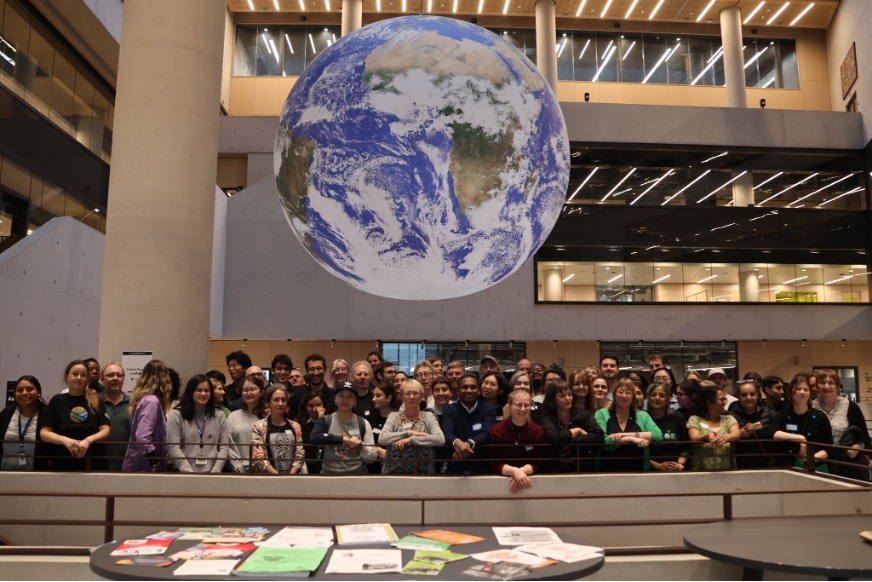
This unique event convened a specially curated 120 participants— 100 community organisers and 20 young leaders from UCL—for a powerful exchange of knowledge and intergenerational collaboration.
The Assembly aimed to explore how communities can strengthen their collective capacity to respond to social and environmental challenges, building on the frameworks and strategies outlined in the London Community Resilience Toolkit, a document produced by London Resilience, which offers practical information and guidance to help communities better prepare for and respond to future challenges and emergencies.
The event was delivered in collaboration between the Islington Climate Centre and University College London (UCL) Students’ Union, and made possible by the generous support of the Greater London Authority (GLA) London Resilience Unit and the Network for Social Change. The event was held at the impressive UCL East campus.
The two-day event included:
- Seminar-style sessions: Each seminar featured short talks from 3–4 organisations actively leading work in their communities, followed by group discussion and Q&A. Seminar topics included: Community Mapping, Community Power & Energy, Retrofit, Flooding and many others.
- World Café Networking: On Wednesday evening, organisations hosted table displays, creating space for informal conversation, collaboration, and inspiration.
- A People’s Assembly held on the final day, designed to identify the best ways of collaborating going forward.
The event was free to attend, thanks to the support of London Resilience, UCL, and the Network for Social Change. One of the outcomes was a toolkit on how to run such an Assembly, and we hope that it can be repeated in other geographies later this year.
Our advice
a) What Went Well
- Excellent partnerships contributed to success: UCL Students’ Union (venue, catering, logistics, students) and London Resilience (co-funding, promotion, convening).
- Perfect attendee mix: students, community groups, major London organisations (Sustain, LCEP, Groundwork), London Resilience, democracy experts.
- Fire alarm incident showed the strength of the group — everyone simply moved outside and continued.
- Atmosphere: constructive, energised, practical.
- Salena Godden (poet) created a powerful moment at the end of the first day.
b) Challenges
- Free tickets meant unpredictable turnout.
- Overbooking by 25–30% solved this.
- We underestimated the briefing time required for seminar leads.
- More flexibility in workshop formats will be better next time.
- Better lanyards / badges
- Funding deserves its own strand/standalone event.
- Community + business resilience should be integrated (currently split in London structures).
Assembly was very replicable, but only with strong networks. Success came from convening the right mix of people.
Best conveners: councils, voluntary groups, associations, Transition groups.
Our budget of 15,000 was enough, but only through:
- major favours
- extremely low staffing costs
- unpaid hours
- UCL’s substantial in-kind support
To deliver this standard sustainably, we would need 50–100% more.
Local groups could run a similar event at this budget only if they secure a free or low-cost venue and catering.
Next stage would be roll out model to other geographies - a different part of the country, or in individual boroughs in London. We are happy to share learnings and help facilitate this.