How can local climate projects take a more purposeful approach to achieve greater success?

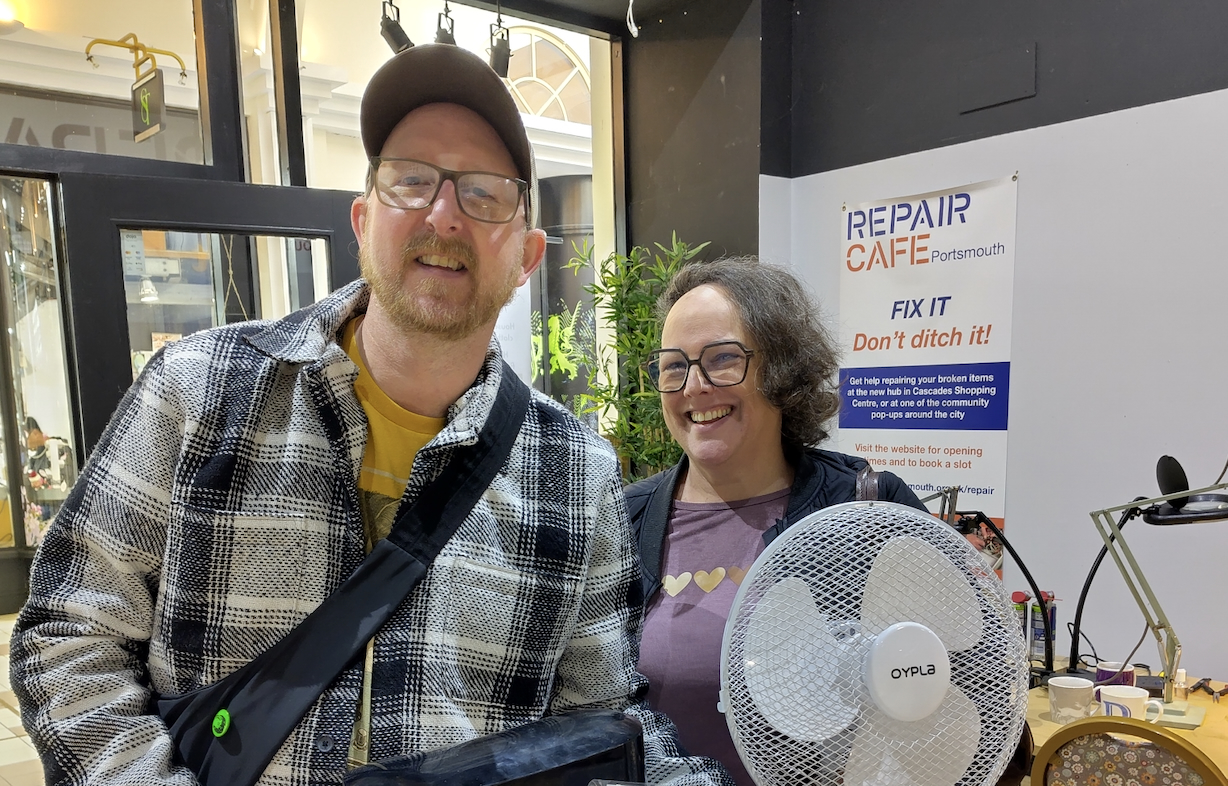
Photo credit: Share (Portsmouth)
“Purpose is the reason you journey. Passion is the fire that lights the way.” – Anon
A brief recap on my last two blogs: we at UK charity Carbon Copy recently asked global sustainability consultancy Eunomia to undertake a deep review, using qualitative and quantitative research, of impactful local climate and environment projects across the UK. It has identified the success factors driving impact, uncovering new insights from these real-world examples.
Based on that research and the projects that participated, we’ve further developed what we call a Changeprint. It’s a new, positive and forward-looking description, in contrast to the negative and reductive framing of ‘carbon footprint’. Changeprint describes all the positive benefits of collective local action beyond just carbon reduction – economic, health, social, educational and cultural – which together help to create greater fairness and a better place to live.
This new groundbreaking report, ‘From Footprint to Changeprint’, reveals three core characteristics of the most impactful local projects. They are a mindset of Abundance, a strong sense of Belonging and a Purposeful approach. The power of each of these characteristics derives in turn from four success factors, also identified by the research.
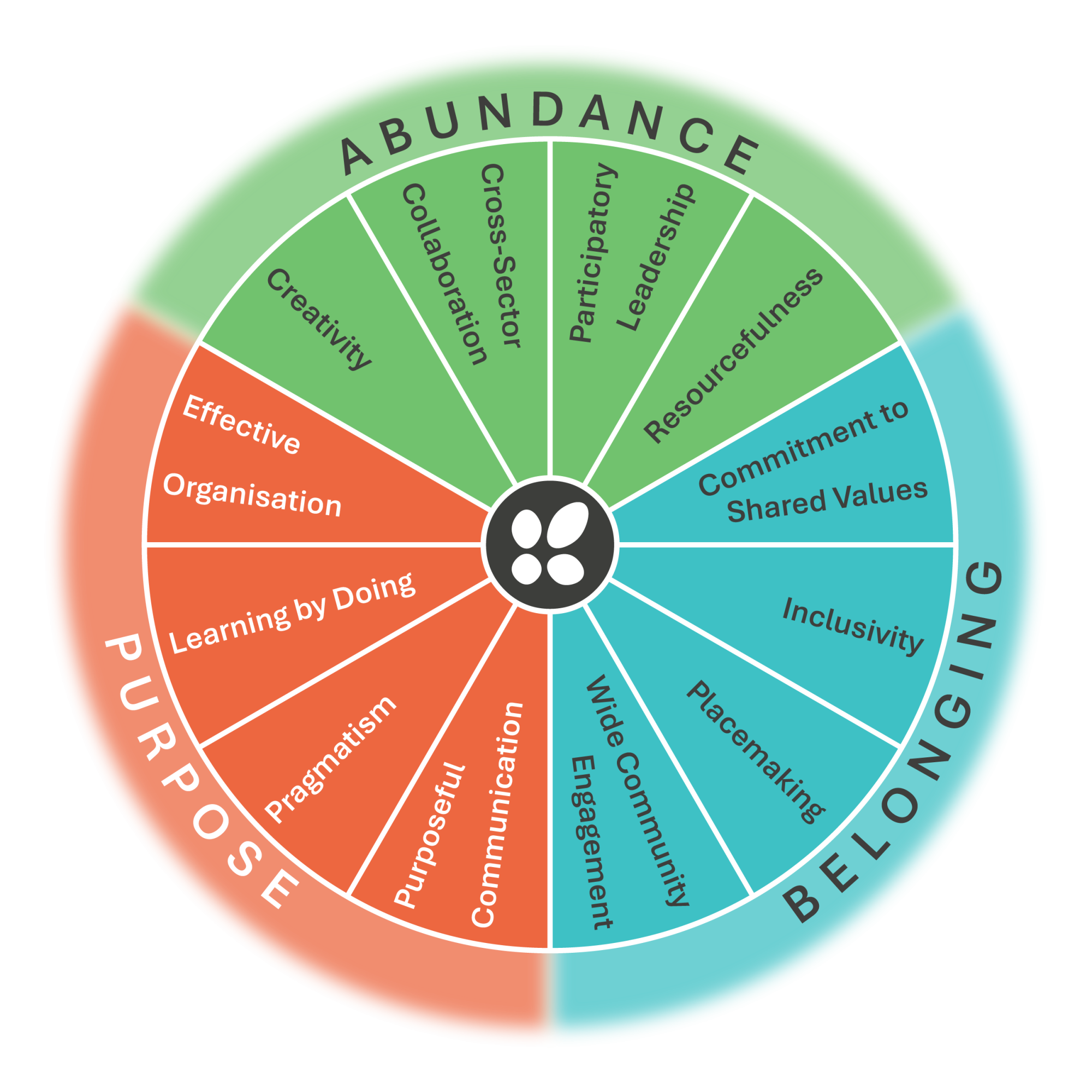
I’ve already written about two of these core characteristics, Abundance and Belonging. Today I shall dive into the third one, a Purposeful approach.
At the core of Purpose is the passion to make change happen, and being purposeful in organising people, resources and communication. It widens to encompass learning from mistakes and a willingness to be flexible, in order to achieve an intended goal. This is liberating because it reduces the fear of failure. Unexpected outcomes become ways to learn from experience and adapt.
A purposeful approach cannot be possessive. We’re all familiar with “Not Invented Here” (NIH) syndrome, which stops people adopting ideas from elsewhere, no matter how useful or successful. Sorry, but we simply haven’t got time for NIH, given the urgency of the climate and nature crises! Let’s just copy and adapt for our unique community the best of what works. Because (as we at Carbon Copy like to point out) copying is human nature.
Our research identifies four essential success factors underpinning the remarkable power of a Purposeful approach. Let’s get into the nuts and bolts, because it’s all about the practical details that make a big difference to project success:
Effective Organisation is frequently cited by project leaders as perhaps the most important success factor of all twelve identified in the research. Strong leadership, maintaining strategic direction with clear objectives, timelines and monitoring, means the project stays focused, aligned to its mission and participants’ values, generating real impact.
The second essential factor is Purposeful Communication – not just informational but relational as well, underpinning trust and encouraging participation. Two-way communication between and among teams is vital, helping to motivate, maintain and align everyone’s efforts. Equally important are the myriad ways of communicating with anyone and everyone in the wider community. Again, good ideas can be borrowed, but each project’s communication approach will employ a unique optimum mix of face-to-face, social media, newsletters, consultations and surveys, townhall meetings and so on.
The projects participating in our research described the third factor essential to their success as ‘Learning by Doing’. They emphasised continuous learning, experimentation and community-driven improvement. In the face of inevitable setbacks, successful projects switch tack, coming up with new and creative approaches. And they needn’t be restricted to their own imagination. Resources such as Carbon Copy’s public database of successful projects are a treasure trove of ideas and potential contacts in other places. Active learning leads to constant improvement in areas as diverse as finance, leadership, strategy development and engagement.
The fourth success factor, Pragmatism, is about being grounded. Successful projects prioritise steady, manageable progress over rapidity, understanding that meaningful impact is built over time through sustained engagement and long-term relationship building. Pragmatic leadership keeps projects rooted in their mission, moving with patience, adaptability, and practicality. It means staying focused, avoiding distraction, and making decisions that align with community needs and available capacity. This often means balancing passion and enjoyment with the ability to make difficult choices, such as setting boundaries, narrowing scope and keeping within limited resources.
One participating organisation that has focused on its purpose with a passion is Share Portsmouth, whose main projects include a repair café, a Library of Things, and DIY Skill Shares. Clare Seek, the charity’s CEO and founder, is clear-eyed about being goal-oriented and being organised: “What’s been important is that we kept reviewing the way we are organised through different stages and that people understood what our goal was at every stage. The two are really important together.”
‘From Footprint to Changeprint’ is inspiring because it really brings out how success is possible everywhere. The report has been put together as an action guide to help organisations of all kinds succeed in creating a bigger, more impactful Changeprint. If you think these insights could support you in strengthening your existing project, or creating a new successful collaboration in your area, do please download the report here.
FAQs
What does a purposeful approach mean in local climate action?
A purposeful approach in local climate action refers to having a clear goal and organising people, resources and communication around achieving it. In the local climate action report, purpose is described as the driving force behind meaningful impact, combining passion with practical action. It involves staying focused on outcomes, being willing to adapt when needed and using both successes and setbacks as opportunities to learn. This clarity of direction helps projects remain aligned, motivated and effective over time.
Why is purpose important for successful climate projects?
Purpose is important for successful climate projects because it provides direction, structure and momentum. The local climate action report shows that projects with a strong sense of purpose are better able to organise teams, maintain focus and achieve long term impact. Purpose also reduces fear of failure by encouraging learning and flexibility, which allows projects to evolve and improve. When everyone understands the goal, it becomes easier to align efforts and sustain engagement across the community.
What are the key success factors behind a purposeful approach?
The key success factors behind a purposeful approach in the local climate action report are effective organisation, purposeful communication, learning by doing and pragmatism. Effective organisation ensures clear leadership, goals and timelines. Purposeful communication builds trust and keeps people engaged. Learning by doing encourages experimentation and continuous improvement. Pragmatism helps projects stay grounded, focusing on steady progress and realistic outcomes rather than quick wins.
How does purposeful communication support local climate action?
Purposeful communication supports local climate action by building trust, encouraging participation and keeping everyone aligned with the project’s goals. The local climate action report highlights that communication should be both informative and relational, with strong two way engagement between teams and the wider community. This can include a mix of approaches such as face to face interaction, social media, newsletters and community events. Effective communication helps maintain momentum and ensures that everyone understands their role in achieving the shared purpose.
What does ‘learning by doing’ mean in the local climate action report?
Learning by doing in the local climate action report refers to the process of continuous improvement through experience, experimentation and adaptation. Projects are encouraged to test ideas, learn from setbacks and refine their approach over time. This mindset allows teams to respond to challenges creatively and draw inspiration from other successful initiatives. By actively learning and evolving, projects can strengthen their impact and develop more effective ways of working within their communities.
Recommended from Carbon Copy
-

Space to Grow
How the Right to Grow could help your community reap the benefits of locally produced food. The UK imports around…
-
 Affordable Energy, Buildings & Places, Greater Fairness, Health & Wellbeing, Renewable Energy, Strong Communities
Sharing the Warmth
How communities like yours could benefit from district heating systems. Just imagine: houses all over England could soon be kept toasty warm…