From Footprint To Changeprint
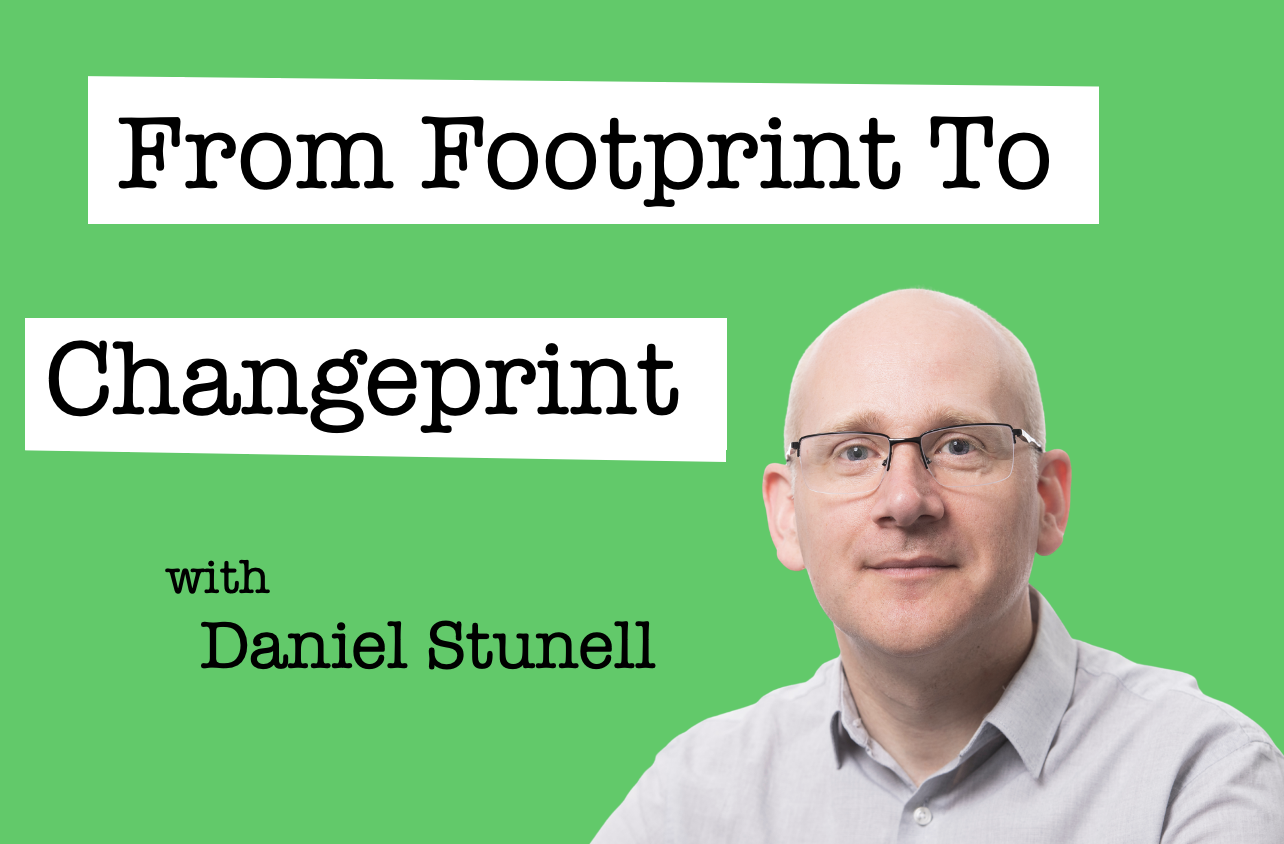
How do some local projects achieve such remarkable success?
Carbon Copy wanted to look beyond funding and understand the role of collaboration and other factors that help communities, organisations and local councils achieve real impact together and create a bigger Changeprint. So we asked a research team at global sustainability consultancy Eunomia1, led by Daniel Stunell, to dig deep and find out.
We have the answer! The research findings are shared a new report, From Footprint to Changeprint: High-Impact Local Climate Action Guide, and are also discussed in a special episode of the Carbon Copy Podcast.
The most exciting finding? Success appears possible everywhere and the success factors identified in the action guide can be copied.
Carbon Copy asked Daniel to reflect on some of the wider implications of this far-reaching piece of research.
CC: Why is climate action about more than carbon reduction?
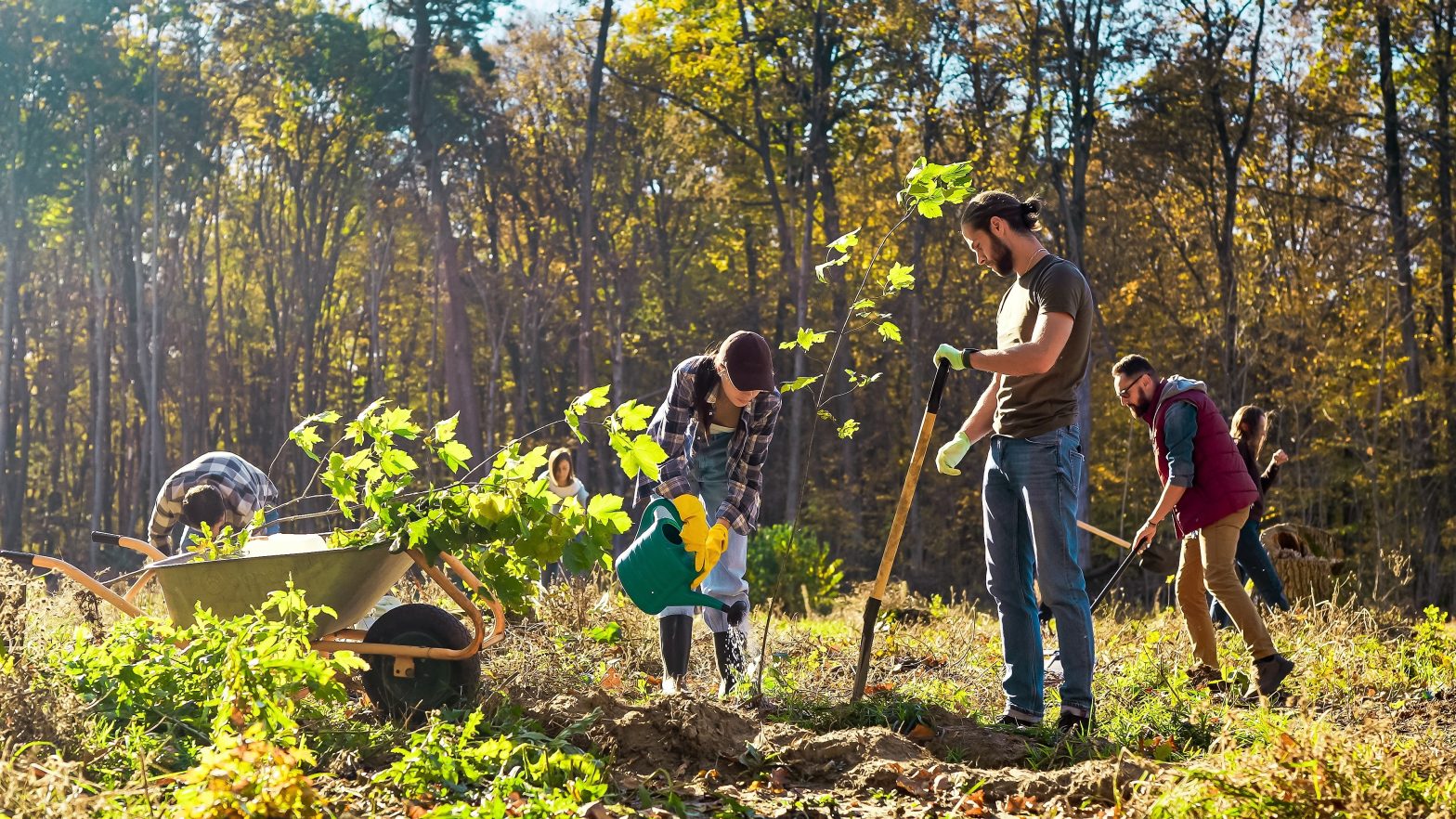
DS: Carbon reduction is of course essential. It’s one big motivator for people to get involved in local action in the first place. But carbon reduction is the end result, and how we get there matters too. There’s scope for significant local – and larger scale – environmental benefits beyond carbon, and the nature restoration projects we looked at in the research were particularly inspiring. And the way of working creates benefits for volunteers, participants, and the wider community.
Actually doing things, and doing things together, is good for all of us, mentally, physically, and socially. And when we build stronger relationships and thriving communities, our capacity to act effectively on climate will grow too. It’s a win-win.
CC: Why is place so important in taking effective local action?
DS: Our communities are unique – the people, the places, and the relationships between them. They also matter deeply to us, whether we realise it or not. The people that live and work in an area know it best – what will work and what won’t. It’s also possible to see progress, which is highly motivating, and it may be possible to engage people that are not focused on climate in the effort, because they too can see all the rewards.
One of the case studies we looked at, Haugheys Bog, knew the community needed to understand what they were doing and run educational activities to explain the importance of peatlands and how best to restore them. They target a wide audience, including schools and companies. This helps turn scientific knowledge into local, practical action – it’s a great example of linking the local to the global. Peatland generally is hugely important as a global carbon store – and Haughey’s Bog is hugely important to the community for a whole host of other reasons too.
CC: How is collective action greater than the sum of indivduals’ action?
DS: There’s things we can do as individuals. But if you persuade a friend to do the same, you’ve doubled your impact. You’re probably also both more likely to stick with it. Scale that up to community level, and the benefits keep multiplying. But crucially there are some things that we just can’t do alone. Ideas like share and repair or tool libraries work precisely because we’re coming together to share knowledge and tools – and I’d say this is a feature of a lot of the projects we looked at.
I truly believe we’re sociable by nature. Acting alone is often harder and more tiring, especially if something is challenging. Doing it together can be fun, inspiring, and, frankly, hopeful. That’s how effort is sustained, new ideas emerge, and a Changeprint grows.
CC: Can the success factors you have identified be copied?
DS: Yes! We talked a lot as a research team about how to frame and describe the ideas that emerged from the research. We’ve talked a lot above about the importance of unique local contexts and knowledge – and that’s true. But we think that relates to deciding how to realise these success factors in situ, rather than whether they will be beneficial.
As an example, the success factor of ‘Wide Community Engagement’ is always fascinating to me. It’s essential – people make projects, multiple organisations bring more resources and knowledge, and buy-in from the wider community matters, even where people aren’t participating so actively. But how you build that engagement is often highly dependent on existing local networks, relationships, and understanding of how to speak to people in ways that really connect. There’s no shortage of different ways to how projects do this, and find their fellow changemakers.But it’s essential that it happens.
CC: Success is possible everywhere. Why did that not surprise you?
DS: The core ingredients to successful local climate action are the people, the place and the solutions, and these exist in every community. Every community has assets to build on, local knowledge, community networks, businesses, public institutions and natural resources.We deliberately selected case studies for this project that were ‘normal’ – these projects are exceptional and unique because the people and communities have made them that way, not because of special starting conditions.
Carbon Copy’s Big Local Actions for example can be adopted everywhere – the solutions will be tailored, and the actions seen as most valuable might vary by community. But the underlying ideas remain. Every community has scope to organise, collaborate, take ownership and make a change. And the more you do, the easier it gets (or perhaps the more ambitious you get!). More people means more ideas and energy, and communities adapt ideas and learn from each other too – we very much hope this project contributes to that.
CC: How can this report help people make a bigger impact?
DS: We’ve deliberately written it as an action guide rather than a technical research report. Using the success factors as a checklist when thinking about building local projects will be helpful to many.
I also want to acknowledge that local groups have a lot of wisdom – many will be instinctively doing many of the things in this guide. But thinking about them explicitly may help local groups explain to potential partners how a project will work, and perhaps make it more likely projects can get the buy-in and support needed.
Fundamentally, this guide should help people identify how to take more effective action – and there is demand for that. For example, the National Emergency Briefing on the severity and imminence of climate change in the UK has been turned into a short film, for community showings around the country throughout 2026. That will obviously cause many people to ask, ‘what can we do?’. There’s resources out there that can answer that, such as Carbon Copy’s Big Local Actions.
From Footprint To Changeprint primarily addresses the next obvious question: ‘how do we do it?’. When faced with the climate crisis, the best response is taking action, together. And this is very much a guide to help make that action count.
CC: Anything else you would like to add?
DS: The climate crisis is big and daunting. If we want change, we will find making change together is a real multiplier both in terms of what we can do, and in terms of the benefits that brings. We will reduce carbon, yes, but we will also encourage greener, healthier, happier, more connected, and thriving communities – which in turn will make us stronger when it comes to taking more action.
So, my final comment is a big thank you to changemakers up and down the country that are already building a better future – and especially those that shared their insights with us for this study. There’s enormous knowledge and expertise out there in our communities, and I hope this report helps share and mobilise even more of it. Speaking – and listening to – the changemakers we interviewed talk about how they did it and what worked for them was a really rewarding element of the research.
1Eunomia are an independent, B-Corp Certified research consultancy, who work extensively on Circular Economy, Natural Economy and Carbon Reduction with government, businesses and NGOs. Eunomia work locally and nationally, across all four UK nations, and overseas.
Recommended from Carbon Copy
-
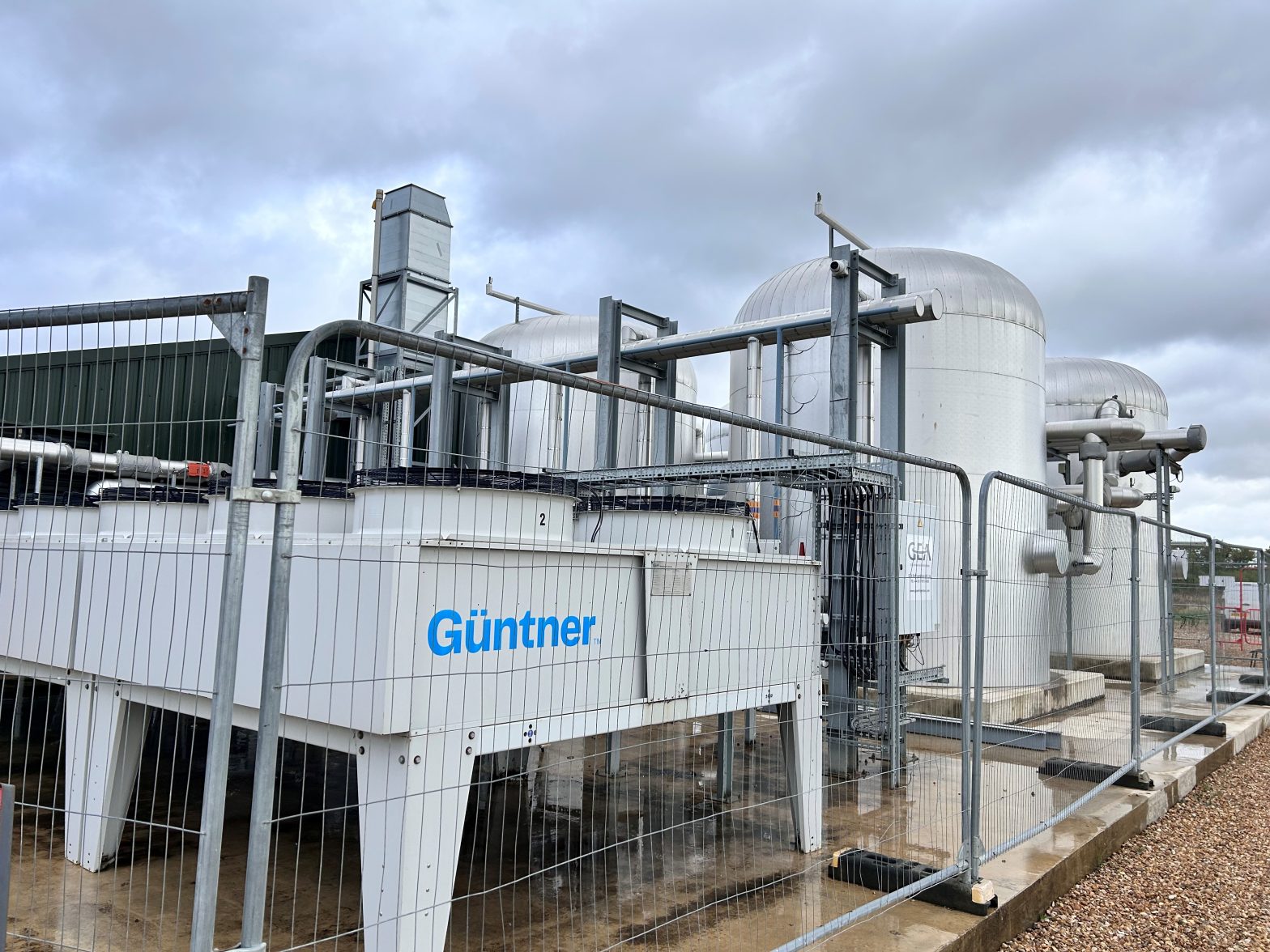
Out with the oil, in with the new!
A warming look back at our Community-to-Community Workshop with Swaffham Prior Heat Network What does it take for a rural…
-
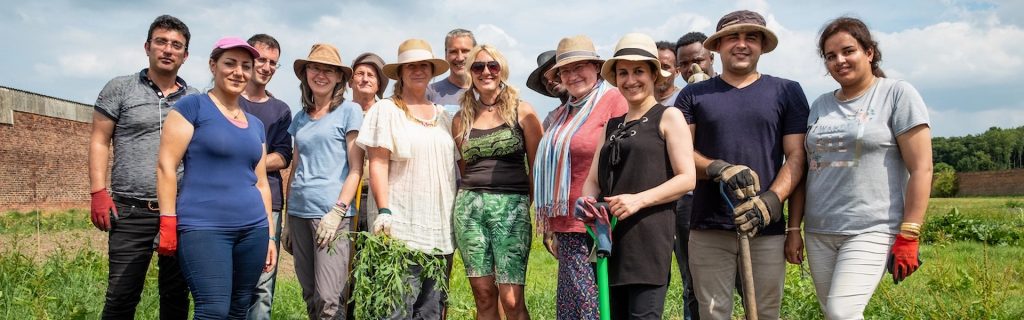
Finding the plot
How did Hull become the first place in the UK with a legal Right to Grow? What does it actually…
-
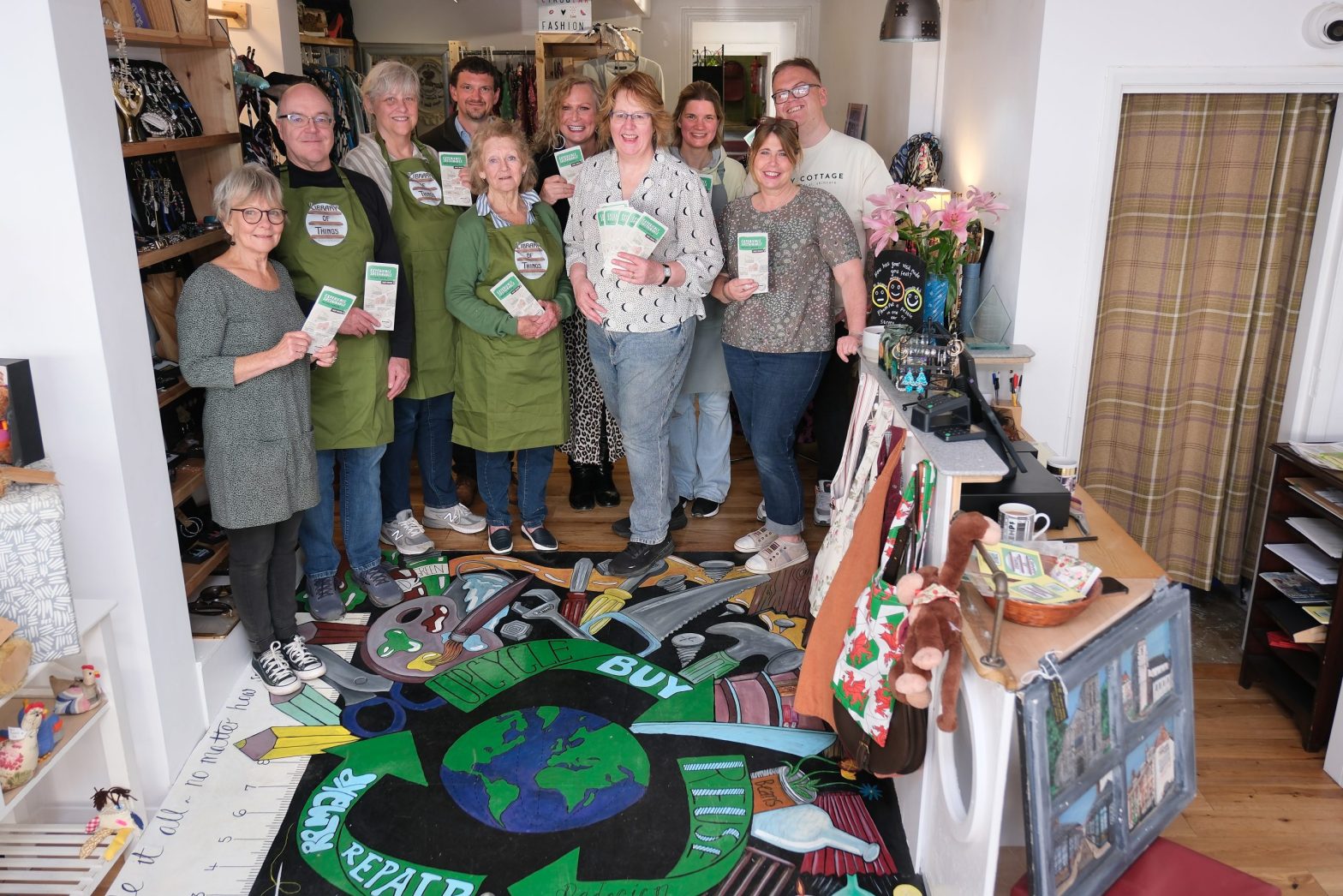
Refuse, reduce, repair, repurpose, recycle – recap!
Circling back to our Community-to-Community Workshop with Circular Malton & Norton How long does it take to move people to…
-
From Footprint to Changeprint is making an impact
How do some local climate initiatives achieve remarkable impact? We think we have some of the answers. When Carbon Copy…