Closing the Loop
Discover how Circular Malton & Norton are connecting businesses, community organisations and local people to create a market town with zero waste!
Circular Malton & Norton is more than a sustainability initiative, it’s changing the way of life for the people of Malton, North Yorkshire. Founded in 2021, this fantastic circular economy project is tackling waste and overconsumption through creativity, collaboration and community engagement! Listen to – or watch – this episode of the Carbon Copy Podcast, to meet founder Sue Jefferson, and a whole host of volunteers, business owners and others involved in the organisation.
- Learn where the idea came from, and why Sue wanted to appeal to the “hesitant majority.”
- Discover how creating a hub on a busy high street has led to more interest and more people getting involved.
- Understand what connects reuse and recycling, energy production, business sustainability and arts and crafts workshops.
- Feel inspired to create a more circular economy wherever you live!
Join Carbon Copy Podcast host Isabelle Sparrow, with guest host Robyn Chowdhury of the Local Storytelling Exchange, for this circular economy podcast episode.
A full transcript of the episode is available below.
Show notes
Carbon Copy held a Community-to-Community Workshop with Circular Malton & Norton founder Sue Jefferson. To watch this workshop back, visit: https://carboncopy.eco/workshops/closing-the-loop
This series of the Carbon Copy Podcast is brought to you in partnership with the Local Storytelling Exchange. Find out more about them here: https://localstoryexchange.org/
For more information about Circular Malton & Norton, visit: https://circularmaltonnorton.org/
To discover more circular economy stories to inspire you, visit: https://carboncopy.eco/action-area/circular-economies
To listen to previous episodes of the Carbon Copy Podcast, visit: https://carboncopy.eco/podcast
To get in touch with us to share feedback or ideas, email [email protected]
Podcast transcript – click to read
Izzy: Hello and welcome to the Carbon Copy Podcast. I’m Isabelle Sparrow and today we’re recording the first in our new series. And I’m joined by our special guest host Robyn Chowdhury from the Local Storytelling Exchange who is going to be co-hosting with me for this episode and the next one. And we’re here in the Circular Malton & Norton circular hub, uh, where we are going to be learning all about the amazing work that this project does. So Robyn, can you just start by telling us a little bit about yourself before we get going?
Robyn: Yeah, I’m Robyn. I’m a journalist in Yorkshire and Humber and I work for the Local Storytelling Exchange. I’m really excited to be here.
Izzy: So we’ve got lots of people to speak to today, so we better get cracking. Um, and we will check back in at the end of the day and see how we’ve got on.
We wanted to start with the origin story of this organisation, so here’s Robyn having a chat to Sue Jefferson, co-founder of Circular Malton & Norton.
Robyn: Nice to meet you Sue.
Would you tell us a little bit about where we are today?
Sue: So where we are today is what we call the circular hub on the high street. I think the first one that’s ever been on a high street. Wheelgate is Malton’s kind of busiest road and we moved here so that we could really reach everybody and particularly those who’d never really engaged with climate action.
It started with a view that I had, like many people was I’d like to do more about the environment but life gets in the way. It takes all my effort to even wash my yoghurt pots and put them in the right recycling bin. And I wondered if there was anyone else like me and I felt overwhelmed in terms of what I couldn’t do and what I couldn’t influence. So that’s what we started with and said how could we reach what we call now the hesitant majority and inspire them just to take a first step and then we can do more. So we put out a call to people having been inspired by a TV programme where they convert things from waste. And we got a handful of people who got involved.
We started somewhere very small on the edge of town and it just has been like a tiger by the tail. So we’ve then moved here so we can really make a difference. We want to create a circular economy market town and that means a town with no waste. So we’ve got to really influence everybody, every resident, every visitor, every business to take that behaviour change.
Izzy: The first volunteer we spoke to was Mandy, who helps to upcycle items in the circular hub
So, Mandy, you’re making something really creative and lovely here. Can you tell us about what you’re making?
Mandy: So, the piece of furniture we’ve been donated, which is an adult’s rocking chair, we’re thinking that it doesn’t need too much messing about with because it’s really pretty, but I’m making a cushion because the idea is it might become a nursing chair, in which case it needs a nice cushion, that’s got a cover that we can take off – if you’re nursing babies, everybody knows- it needs to be washable. So, I’m just making, this is fireproof lining fabric, so I’m just going to make a cushion with this and then cover it with some nice fabric from somewhere in our collection of lovely fabric.
Izzy: So, can you tell me about your journey into doing this work? Was this something that you were doing prior to getting involved with this? With Circular Malton & Norton? Or is it something that you’ve picked up recently?
Mandy: No, I was an English teacher, but I learnt to sew at secondary school, and I was thinking on the way here 50 years ago, more than 50 years ago, and I’ve always been a sewer. I’ve always enjoyed being creative, using the sewing machine. And so, when I saw this place had opened, I thought, oh, that’s, I just recently retired. And I thought, oh gosh, I could use my sewing skills because apparently only a quarter of people nowadays can use a domestic sewing machine. So, I thought, right, I’ll go in and offer my services. But since then, I’ve learnt about sort of looking after furniture and lots of other skills. I’ve done a bit of woodworking, and so I’ve built up my own repertoire of skills, not just bringing, you know, sewing to it. And I’ve really enjoyed that. It’s been really good.
Sue: So in terms of the people who volunteer here, probably every type of person and every age. Our youngest upcycler is 11 years old. He makes the amazing button art and pin cushions. His grandfather then came in with him and he makes our metal work, some amazing sculptures.
We’ve got people who’ve been sewing all their life and then also some artists who just do it for their kind of mental well-being. And now they’ve found a place where they can be purposeful, share ideas and so on.
I talk about the fact that we’ve had everyone from a Trump supporter to a Marxist in our group, but they all get on because they’ve got this common purpose. And our values that we’ve developed together as we’ve grown has been really important because we need to make sure we keep our ethos, which is a very positive one and driving change.
Robyn: Do you wanna tell me who you are, and what you do here?
Olivia: I am Olivia, and I am just a hub volunteer, so I help out here in the main front bit. I help a lot of customers, I introduce them to what the place is about. Sometimes I work on a till, and also I am involved in some of the upcycling.
Robyn: Sue mentioned that you came in here with your friends, and then you asked if you could volunteer. Do you want to tell me a bit about that moment?
Olivia: Well, yeah, I came in here, just as shopping about, I even bought a little pin that’s on my lanyard, and I just loved what is in here, I loved the community, it just seemed so lovely, and I was looking for somewhere to volunteer just to fill up my weekends, and I thought this would be the perfect place. So I asked about it, and I got all sorted, and it was really nice.
Ever since volunteering here, I have realised just how impactful it’s really made an impact on my life. I’ve been able to, I’ve grown in so much in confidence, I find that I’m better at talking to people, also I’ve learnt so much about the environment and how I can help out, and I feel so much the purpose that I can make, and it’s such a lovely thing.
Robyn: You’re connecting so much more than just people who like making things. You’re connecting people who want friends, who need skills.
Sue: I think that’s a really important kind of factor about us is we are much more than just one place or an upcycling place or a repair cafe. We are about creating this circular town and that means engaging with lots of different organisations.
And often with either environment groups or community groups, they, like all of us, we struggle with how can we afford to be where we are, they’re fantastic at what they do but not enough people know about them. We see part of our role is to make sure we almost drive that awareness and visibility and showcase that.
What we realised is that collaboration and everybody brings something different and actually as a group, we’re so diverse in terms of the people that we work with as well as all sorts of partner groups and so on. And what we found is actually there’s a lot of people with a lot of skills if we’ve just provided that way to make it easy to get involved.
So putting call outs, again, having a place on the high street means people come across us every day. But we realised people are really inspired to act and what we’re doing now is providing them with ways to act. So they might want to make something or create something and can be part of one of our classes. They might want to live more consciously. We can direct them to Library of Things or our free fridges or give or take days, which is like jumble sail on speed, or to shape the change and volunteer with us and so on. So it literally, as we talk about this being an inspiring space to kind of prompting people to act.
Izzy: We’re here in this absolutely lovely refill shop. I don’t think I’ve ever seen such a well-stockeded refill shop. Davina, is this your project? Like, how did this come about, and what’s your role here?
Davina: Yeah, so I’m the owner of The Beecham Way. It’s a health food shop that originally was in my family for about 40 years. It was actually bought in the year I was born. My dad was going to name it after me, and very sadly chose not to, which is not okay! But I took over the shop in lockdown, actually. It was about two days before the first lockdown, and at that point, there was only two or three little refill items in the shop, and it’s just got bigger and bigger and bigger and bigger.
And then, about two years ago in November, moved to a shop that was about six times the size, and we’ve now got our own refill room that is full of, yeah, everything refilly. So, yeah, it’s mine and a kind of baby that’s grown, really, with me.
Izzy: So, obviously, your family had the original shop for 40 years, and that was focused around health food, specifically. So, how did you sort of start to make that transition into the refill side of things?
Davina: Yeah, really, yeah, really interesting. So, when my dad took over the shop, so he was actually a pharmacist by trade, and had a health food shop because he wanted that alternative, kind of complementary side of it as well.
And so, it’s always been alternative. But even when it wasn’t kind of cool to be alternative or vegan or, you know, any of those kind of things, for me, the whole ethos of the shop was about, you know, looking after ourselves, looking after our bodies in the most natural way possible, but also, a part of that was also looking after the Earth, and really, it’s kind of simply for me. And I suppose in the last decade, sort of 10, 15 years, we’ve all been becoming more and more aware that we need to do more for the planet, and particularly the oceans. So, a huge issue that we know in terms of evidence is about plastics, so single-use plastics. And while it can feel overwhelming at times, I think, you know, when we look at what we can do, what we can’t do, and often, we think like, what is the point? I think with refilling, it’s something really easy to do, we can all do, and it is cheap, it saves money, and you can make a collective difference. And I think that’s why it’s a simple thing that we’ve been able to do, kind of like morph the shop into expanding all this. And it’s just really gratifying, it’s satisfying, people love to come in and do it, because you feel like you’re physically doing something that makes a difference when things can feel a little bit overwhelming.
Izzy: What’s your kind of connection? Obviously it’s a circular business, but how did you kind of get involved with the Circular Malton & Norton organisation and what sort of connections do you make, what kind of work do you do together with Sue and her work?
Davina: Yeah Sue’s great. Sue is always kind of championing us, she uses us, she’s one of our customers as well. I think, because it’s the kind of community where a lot of us have been here a long time. So I was born in Malton and moved away to uni and then came back. But a lot of us know each other, have grown up together and we’ve just always had this natural affiliation to support and use each other because we know the importance and value in independent businesses. So we go to a lot of networking events that Sue puts on, the circular economy group, where we meet other business owners, can talk about what we do, what we offer.
Izzy: What do your family who started the original shop think about all of this?
Davina: Yeah, so they’re really proud. Unfortunately, when I took the business over, my dad was diagnosed with cancer. And then he died five, six years ago now, but he used to come into the shop. So it actually had two owners in between us. And so he found out before he died, before he got really ill, that I’d taken back the shop. And he was absolutely proud as punch that we could manage to get the Beecham name above the door again. And he used to come into the old shop and just sit in the window and potter and look at what was going on. And he loved that this element of – because this was something new and loved what we did. And a lot of the time, because I’ve got three children of my own, he was all about his life really was devoted to his family. And but wanted to make generations things better for the generations in the future. And he could see this is a very real way of being able to do it. And like I say, if you do it on your own, you just think, well, what is washing-up bottle a week? What is? But when you’ve got hundreds of people that are doing that every week and you’re making thousands of savings, really, I think in the first year, we managed to save about 30,000 pieces of single use plastic going to the other versions of landfills and that. But we were a small shop then. So it’ll be much, much more now. And I think when you add it together and can see that in part, like he was proud and I’m proud and hopefully I’ll carry on making him proud going forward.
Sue: The question is really, how do we know it’s working?
And it’s difficult. One of the things we measure is how much we’ve saved from being thrown away. And we’ve got a lovely piece of software created by a student who was with us from the university.
And we weigh things and check its material content and that actually converts it into carbon saving. That’s one classic measure. But the other element is we have some jars that I talked about on the webinar, where we, how can we find out how people are actually feeling when they’ve connected with us? In fact, the inspiration was the toilets you get on motorway service stations when you leave them and they say, “How have you felt, how clean it is?” So we created three jars which say, “How has your visit made you feel?” No different, happier or inspired to act. And people put the pebble, the right pebble, in whichever jar they see fit. And we’re amazed that the jar where people are inspired to act is overflowing. And when it’s overflowing, we then do a count and 72% of people are inspired to act.
And that hasn’t really changed even when we’ve moved to being on the high street, which just shows you people want to act. It’s just make it easy, make it fun, make it every day and engage them rather than preach to them.
Robyn: Nice to meet you Shaun. Do you want to tell me a bit about what you do here?
Shaun: So I’m Operations Director for DH Group and with DH Group as a contractor we build these industrial estates. We’re now in a position where we’ve got a 20 acre site. We’re now on the last two acres.
I met Sue who runs Circular Malton. They have a unit on site. They rent a unit on site. So when I realised that that was there, I went over and introduced myself and saw what they did which is fantastic. We meet quite regularly, Sue and I, just to update what we’re doing and what she’s doing and we’ve looked at various ways that we can help Circular Malton as a business, we think it’s the right thing to do.
We are talking, there’s the anaerobic digester that’s going up into Eden Camp. We’re looking to support Sue in facilitating that and making sure that that happens.
Sue: So we see there’s sort of three parts to what we do. And so our strategy is about engaging residents and visitors, engaging businesses and also attracting more people to the town, particularly more businesses.
Because while there’s less of an employment issue here, everyone’s a lot of people are on low wages. And so how can we make sure a rural town is on the kind of the forefront of what the future looks like as well?
So Malton is known as being Yorkshire’s food capital.
And we asked about what about the food waste? We’ve got manufacturers of food waste. We’ve got hotel schools and so on. And we said, what if we took the food waste, built a community anaerobic digester that turned that waste into energy, built that at the edge of town and powered some local businesses? What do we think? And we shared that as a kind of question with the local newspaper and feedback. And we thought might be quite controversial. Well, I have to say, probably three, four years on. It’s a leading light as a project because we secured planning permission for a site at the edge of town.
We had no objections at all, which is the first in the whole industry for anaerobic digestion. People want to have a share in that. We’ve got private investors interested. We’ve got businesses who want to be the customers of that energy. And it’s now expanded. So we’ll actually have other renewables in as well. And we’ll have now a whole decarbonised business park that will give businesses price advantage. So they won’t be subject to the kind of the global energy pricing. They’ll be on renewables. They’ll decarbonise the minute they join us. And it will bring, we know, new businesses to the town. So that’s a really exciting project.
Izzy: Yup, you heard that right, an anaerobic digester! Not something that you perhaps know that much about. Luckily, there is someone in Malton who knows a lot about it, and her name is Lucy. I spoke to her next about what an anaerobic digester is, and why it’s important for a circular economy town.
Lucy: So I live locally. I’ve lived in and around Malton my entire life and come from a farm just outside the town. So my kind of farming connections are what got me into really into the biogas space into the anaerobic digestion sector. So I’ve worked in this industry for 20 years now, really working with farmers, working with investors, trying to look at how we can make that a use of waste that’s available on farms or within local communities.
So that’s kind of the core of what I do. Sue and I have come together through various events. We kind of attend the same events we got talking about anaerobic digestion that branched out into many other things. And the project ideas really evolved from there.
If you think about circularity, we need to think about resources that we have available as a community, where the value is within those resources and how we can realise that value within the community and keep that value within the community. So anaerobic digester is actually quite a natural centre to a circular economy concept. So if you look at waste that’s generated within the economy, Malton’s a fantastic foodie town, so there’s a lot of food-related businesses. There’s waste inevitably generated within those businesses.
So, pastry from a pie factory or other waste from food manufacturers or the retailers that sell food on the high street. So if you think about that waste, what can we do with that waste? Rather than just thinking about we need to dispose of it, we need to get rid of this. Actually think about that’s valuble, it’s got calories in there. So rather than humans or animals eating those calories, can we convert those calories to energy? And that’s exactly what an anaerobic digester does. It converts food waste or other waste, organic waste from farms and things into energy. So it produces gas called biogas and that gas can be used to generate heat, power, transport fuel, any number of different energy things. And that’s where the circular economy concept’s born.
The plan, I think, is for it to be a staged development. So because it’s been led by Circular Malton and driven by the community and we kind of want to keep the community on board involved and kind of informed with this. The idea is that it builds fairly slowly. And so I think over time, pick off some of the easier, the easier renewable energy technologies like solar, for example, that could be deployed first could be implemented first, then look at some of the others. And I think the anaerobic digester is a slightly longer term generally takes a year or two from planning to kind of producing first gas. So I think that’s probably the timeframe we’re looking at.
Izzy: I think it will be a really good another really good example that is like inspiring for other other places because you know there are places like that, like enterprise parks all over the country that could be self-sufficient in that way.
Lucy: There’s nothing there’s nothing unique to Malton in this project that that means it can’t be replicated elsewhere. I think the idea here is keep it simple and keep it replicable because that will make a bigger impact nationally than doing something that’s really unique to the conditions around Malton.
Sue: So one of the questions is why Malton? We’re a rural area in North Yorkshire and it was really practical. It’s kind of where I lived. I was really inspired by the combined authority who saw the opportunity for a circular economy and would like the region to be a circular economy. But no one knows what that means. And for businesses and in our area, we’ve got 98% are small or micro.
Businesses might want to do things, but there’s so many other pressures on them. So we thought if we created a pilot was can we create a circular town and engage businesses as well as residents and see the impact. And as I lived here, I said, look, I’ll give it a go. I plan to help set it up and step back. But several years on, I’m immersed in it because the impact is so great. It’s the impact on people. I love meeting the customers. I love sharing what we do because the idea is it’s replicable across other places and we can see the impact it’s having on the town. And we even had people come over from Denmark, from the Town Planning Institute to see what we were doing and to to share that. So, yeah, it’s kind of I think it works with a community level or a suburb. Market terms are great in the 1600 in the country. So it’s definitely something that’s replicable.
Izzy: Helen started off as a volunteer at the circular hub, but is now working in a paid role for Circular Malton & Norton.
Where did all this come from? How did you get involved with this shop?
Helen: I’ve always loved painting. And I always painted on canvases. And I work in a home improvements as a full-time job. They were pulling these beautiful sash windows out. And the wooden timber window, still with full glass in. And I was just like, oh, no, that can’t go into the skip and just be thrown away. It’s got a bit of history. It’s had a life.
And I dragged them out and started using them as canvases. And then Sue approached me about the recycling shop and volunteering, creating different things for people. And I said yes immediately, because I love the fact that you can just recycle things and paint on different things and make something unique. And it’s always reusable again.
Izzy: Yeah. Yeah. And the stuff that you create is so beautiful.
And then from that, you’re now actually working here as a job. When did that all happen?
Helen: So only this year. So I’ve still been volunteering, still creating commissions, still helping let people know what we’re all about.
And then the job opportunity came up.
This was just an ideal opportunity for me to start and transfer from having a full-time job, because I’ve always loved artwork. I want to start and get more involved in doing my artwork, and getting it out there, and recycling, and letting people know that it’s good to not throw things away and see what other uses things have. So yeah, volunteering was a perfect way to sort of get into it.
Just finding this place was it like stole my heart in a way, because I just– I knew that it was the place that I needed to be, where I could grow, and with like-minded people that want to do the same thing, and let everybody else know that it is possible, even in small doses, just making sure that you’re putting the recycling in the recycling bin, or just donating things, or going to shops and finding places where you can get secondhand stuff, or upcycling yourself even. Because we do workshops as well. So we can add a bit of fun into it as well.
And it’s really lovely, because everybody gets on. All got the same mindset. They’ve come to have a bit of fun with a friend or by themselves and a bit of company sometimes.
So yeah, it’s lovely to see everybody.
Izzy: Yeah, it’s really nice that it has that impact that’s beyond just the kind of creative side of things. Yeah. It’s also just helping people.
Helen: Yeah, and they get to go away with something that they’ve created themselves, and hopefully that will encourage them to create more things or to even come back to more workshops and learn more skills.
Sue: One thing that I reflect on sometimes is what has this done for me personally?
And I have two sons in their 20s and 30s now, and I felt how can I play a part in terms of tackling climate change?
Because it’s they that will really notice the impact of it. And I’d felt overwhelmed and incapable of doing things. This, I think, has provided something that’s meaningful. I really, you know, in fact, with all the volunteers we work with, we realise we’re part of creating major change, but bottom up.
And so that we will have an impact, a very positive impact. The fact that we influence policymakers now, the fact that we are working with Defra and the UK government, other countries is like, yeah, this this is about the town thriving and the people and businesses benefiting from it. So there’s a very local positive impact. But actually, the goal is that impact on change that you wouldn’t necessarily expect from a lovely quirky shop on the high street. But behind this, it’s it’s something quite powerful.
Izzy: Wow. We have met a lot of people today. Um, so what did you think? What, what are your thoughts about this organization and all the stuff it’s doing?
Robyn: Oh, it’s so nice to see somebody so dedicated to making this town sustainable and keeping it local. And it was so nice to just see how well connected everyone was.
Izzy: I think the local element is something that I found really like, I don’t know, it just made me feel really like good and like warm inside. Like everybody I spoke to, um, seemed to have like a really close personal connection with this place. Um, like, um, Mandy, who I spoke to earlier, um, she’s sort of lived here all her life and, you know, she just found out about this place by walking past and, and Davina who I just spoke to in the refill shop, her family had owned that place for 40 years and, you know, she’s continuing that tradition and it’s, it’s just, it’s such a like lovely thing that people who are feeling so much pride in their place are making like this effort to kind of keep it going and make it, um, you know, a better and thriving place.
Robyn: Yeah. I really liked talking to Olivia, who’s just about to go to college and she came in here with her friends and she just loved it so much she decided to volunteer here and you can see so many beautiful, um, little pieces that she’s done, all these acrylic paintings, uh, on glass and, uh, yeah, made me wanna move here!
Izzy: Yeah, it definitely seems like a really lovely place to live. Um, I think, um, one of the things that we’re trying to do with this podcast series is like really help people to understand that, you know, success is possible and it’s possible to, you know, take inspiration from projects like this and, and, and do things in your own area. Now, obviously not everywhere is a, is a Malton style market town. Not everywhere, um, has, you know, all the people that are involved with this project, but there will be things that people can learn from some of the projects and some of the organisations that we’ve spoken to today. Um, what do you think, like, what would your like top tips be that you like have found out today? Like, is there anything that you think, oh yeah, that’s a really good nugget of information that I would like tell someone about if they were trying to set something up.
Robyn: I think using your local like assets, if you’re trying to set something up, like if you go, oh, I don’t know how to do crafting. I don’t know how to do carpentry. Have a look around. You might have a neighbour. You might have someone across the street, somebody who works in town who’ll be able to help you out with what you need. And I think that’s so important getting the help in those early steps.
Izzy: Yeah, I think that’s right. And I think that’s very much something that we’ve come across in our own like research as well is that idea of like, you have so many resources, you have so much abundance in your place. You just have to go seek it out.
Thank you for listening to the Carbon Copy Podcast with me, Isabelle Sparrow, and me, Robyn Chowdhury. Thank you so much to Sue Jefferson of Circular Malton & Norton for saying all of this up for us and for arranging all of these interviews with the incredible people that we’ve spoken to you today, who I’m not going to list because I think I will forget someone and that will be really embarrassing. Thank you to our producer and editor, Brad Ingham, and do make sure you check out the next episode, which is going to be all about Hull Food Partnership and the Right to Grow.
If you enjoyed this episode, please do leave us a rating or a review, and subscribe wherever you usually listen to be alerted as soon as the next episode lands. Until then, goodbye.
Recommended from Carbon Copy
-
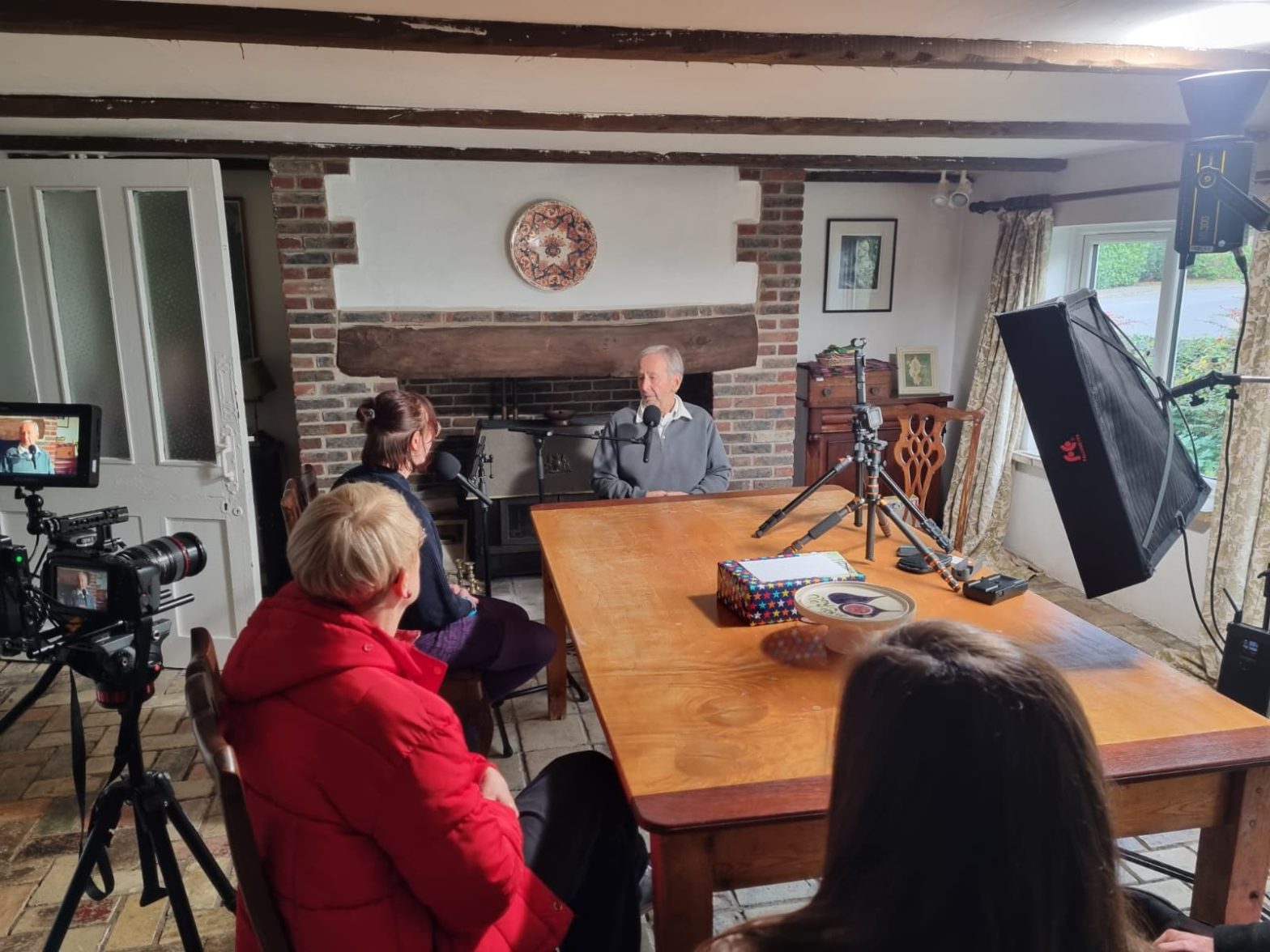
Community-to-Community Stories: coming soon!
How do some local climate and nature projects achieve remarkable impact? Listen to the trailer for our new series.
-
A Local National Emergency
How can the People’s Emergency Briefing help to create more local - as well as national - action for climate…