From Roots to Riverbanks
Woods, water, wildlife and wellness; discover how Harborough Woodland is bringing them all together for the benefit of the local community.
How do you persuade people to spend a whole wet, winter day outdoors getting covered in mud? According to one Harborough Woodland volunteer, cake is the answer – at least part of it! In this episode of the Carbon Copy Podcast, we travelled to South Leicestershire to learn about Harborough Woodland, a community-led organisation where volunteers help to plant trees, restore nature, reduce flood risk – and have fun doing it!
Listen or watch now to uncover:
- What inspired co-founders Bruce and Kimberley to act in the first place.
- Why tree-planting was needed in this part of the country.
- How the project has grown to include a huge network of organisations and individuals across five counties.
- What you can do if you want to start something similar where you live.
Join Carbon Copy Podcast host Isabelle Sparrow, with guest host Fran Abrams of the Local Storytelling Exchange, for this podcast episode about people coming together and implementing nature-based solutions to protect the people and places they love.
A full transcript of the episode is available below.
Show notes
Carbon Copy held a Community-to-Community Workshop with Bruce Durham from Harborough Woodland. You can catch up on this here: https://carboncopy.eco/workshops/from-roots-to-riverbanks
This series of the Carbon Copy Podcast is brought to you in partnership with the Local Storytelling Exchange. Find out more about them here: https://localstoryexchange.org/
To find out more about Harborough Woodland visit: https://harboroughwoodland.com/
To discover more nature related stories, visit: https://carboncopy.eco/action-area/nature
To discover more about flood and drought prevention visit: https://carboncopy.eco/impact/safe-water
To find out about the Woodland Trust’s work with communities visit: https://www.woodlandtrust.org.uk/protecting-trees-and-woods/campaign-with-us/take-action-in-your-community/
Visit East Mercia Rivers Trust’s website: https://eastmercia.org/
To listen to previous episodes of the Carbon Copy Podcast, visit: https://carboncopy.eco/podcast
To get in touch with us to share feedback or ideas, email [email protected]
Podcast transcript – click to read
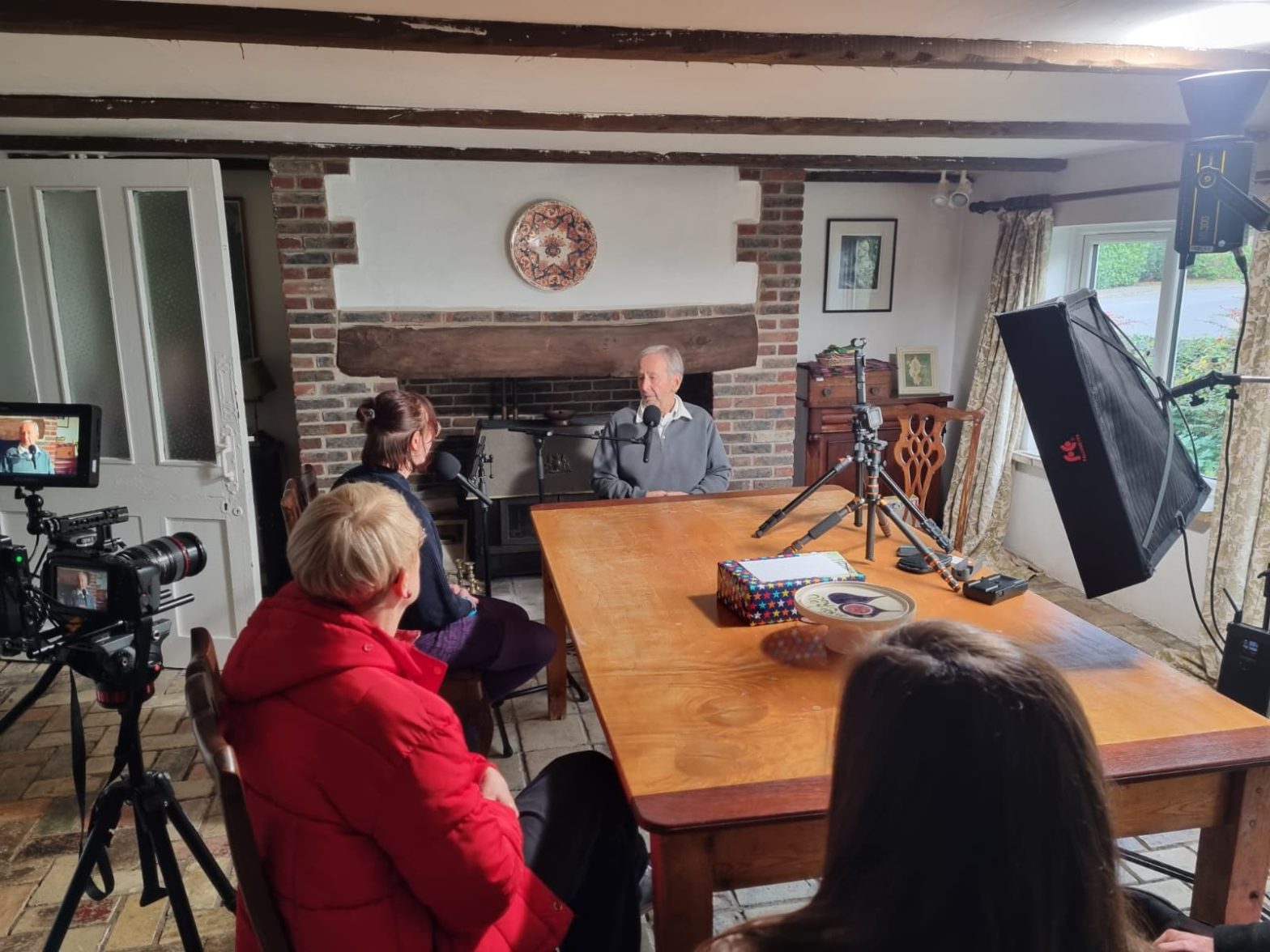
Izzy: Hello and welcome to the Carbon Copy Podcast. I’m Isabelle Sparrow and I’m here on a rather chilly but quite sunny day in South Leicestershire talking about a wonderful community-led project called Harborough Woodland. Harborough Woodland brings together people from all across this area, landowners, charities, volunteers and also some really big organisations like the Environment Agency, Anglian Water and the Woodland Trust to make the area more resilient to flooding, to bring back nature and wildlife and also just to have fun.
I’m joined again by Fran Abrams from the Local Storytelling Exchange. Fran, how are you doing?
Fran: Yeah great, really really pleased to be here and really excited to find out more about what Harborough Woodland’s been doing, it sounds amazing.
Izzy: Yeah so I don’t think either of us were really familiar with this project before we got started. What are you looking forward to most about today?
Fran: I think it just, what strikes me just from reading a little bit about it is the scale of the operation and how in a local area do you mobilise all these people? How do you get them excited about something like this and how do you harness the skills you’re going to need to make it happen?
Izzy: Yeah, I think there’s so many different people involved and I’m really interested to see how they all interact and get along.
So to start with we are going to be heading just over there into that incredible house which is the home of one of the landowners where this project is taking place and we’re going to be speaking to loads of different people who’ve been involved as well as getting to explore this incredible wild space that we’re standing in right now.
Bruce: So I’m Bruce Durham. I’m the co-founder of Harborough Woodland, which started as Harborough Woodland Community Volunteers, because that’s what we do. And we plant trees and find opportunities for doing lots of things.
I was asked to go and defend some primary school children who were protesting against… about climate change in Market Harborough. And on a previous event, some grumpy people had complained to them directly that they shouldn’t be out doing this. They should be in school. And this was a school event organised and approved by parents, those parents and teachers anyway. So I went along. And one of the things that these little kids, primary school kids were shouting their heads off at was, “Whose future? Our future.”
And it was so loud. It actually… The people in the council chambers could hear it. And after that, Kimberley my daughter-in-law was there and said, “Look, we’re going to have to do something about this. It’s ridiculous.”
So we decided to try and find out what we could do. And we talked to Sustainable Harborough, and they’d been involved with all sorts of things. Really fantastic initiatives.
But one thing we found was that they hadn’t done any real work on planting trees. And we also found that our area has got almost the lowest woodland cover in the UK. Cambridgeshire has got less, slightly less. But everyone else has got more. And we were at 3% to 4%.
As a result of that, we’ve got the lowest biodiversity in the Midlands. And we don’t have any food without biodiversity.
You know, people go on about bees, which are crucially important, but it’s the whole ecosystem. And so we decided to plant trees and to find out how to do that. So we did research and found other community groups in the UK doing that, like Forus Trees in Yorkshire and other groups down in Devon and all over the country. And got in touch with them and said, “Love what you’re doing. Where did you start? What’s important?” And we found a really super group called Slow the Flow, who worked with Forus Trees in Calderdale.
And Adrian Horton, who’s the co-founder there, and they’re about ten years old now, he gave us a whole list of priorities. And we thought, “Yeah, okay, brilliant.” So we just copied what other people do and get and pinch ideas from them.
Izzy: Well, pinching ideas is something that we’re very keen on here at Carbon Copy!
Bruce: Absolutely. This is why I like Carbon Copy.
Charlotte: Yeah, so I’m Charlotte Bates. I’m one of the landowners in the area. And for me it all started with my mild to severe obsession with David Attenborough. I was watching one of his documentaries back in 2019 and he did kind of a bit of a plea at the end of it of: “If anyone can do anything, even if it’s small, what’s your opportunity to go and do something? Go out there and do it and try and do something with it”.
So I took a moment and said what could I do? My parents own this lovely land that was always grazed by kind of cows and sheep. And I said to them one day, can we plant a load of trees? Can we just do it? Like, what do you think? Let’s get in touch with Harborough Woodland and plant a load of trees there. Let’s see what they say. So I got involved with Bruce, spoke to him. He came down to have a look at the site and he said, “Amazing, let’s plant some trees…but how about we’ve got this river and we need some kind of looking at some floodland opportunities as well, how about we get East Mercia Rivers Trust involved as well and kind of make this a bigger project than what it started out as?”
So essentially I wanted to plant a little bit of, you know, a few trees to do my bit following David Attenborough to make him proud. And it’s turned into a really big project.
Chris: My name’s Chris Butterwick. Myself and Caroline Gilchrist, my other half, are one of the landowners. We have about 40, now 60 acres of grazing pasture behind us out of distance, out of shot. But it’s grazing land. It’s rented out to a grazing tenant.
I think that from our point of view, the story starts really with Charlotte Bates, looking for trees because they wanted to do some more tree planting in the land and field beside ours. And as part of that sort of process that started sort of 2020 post-COVID, we were eventually introduced a guy called Chris French, who was then with an organisation called the Welland Rivers Trust, which is now merged with another trust, now Mercia Rivers Trust.
And Chris French came along to have a look at our patch of land over there and basically said, kind of looked at it and said, “well, have you considered a restoration project here for rewilding, in fact, a re-wetland project?” And we kind of said, “well, no.” But he said, “yeah, this could be perfect.” And sort of one conversation led to another.
And so he presented this possibility of restoring our patch of land down there back to what was what we learned was called a stage zero. So stage zero is essentially a river course, as was back in approximately 1740s, 1750s, which is the point where we humans started to alter river courses for agricultural purposes.
So there’s a lot of straightening out of of brooks and deepening brooks and all this kind of stuff to increase agricultural land. And the evidence was very clear down there.
And he said, well, look, one of the things that is part of the rewilding, regeneration, re-wetlanding thing and flood management was to take where the opportunity existed to return an area of river course back to stage zero.
So this concept of of taking this area of land – which is not huge, I mean, we’re only talking about two or three acres or maybe five acres or so – back to being marshland and all the biodiversity that would consequently occur was obviously very exciting thing to do.
And it happened incredibly quickly. So in the sort of six months to a year following the project being completed, you know, we saw kingfisher down there for probably the first time. It’s not like kingfisher had never been there, but we’d never seen them.
Snipe reappeared. We’ve had some great egret down there. And just a few days ago, we saw an otter only about 20 yards away. And again, I’d seen I’d seen otter footprints before, sort of immediately after the project was completed. So we kind of knew they would be there. But essentially, it was all that that notion of of changing the environment back to where it had been way back when and then see what would happen.
Izzy: So, Bruce, we are standing here in this slightly drizzly, slightly blustery spot down on Charlotte and John and Debs’ land. And can you just tell us where we are and what we’re looking at?
Bruce: So we’re near Smeeton Westerby and we’re on the Langton Brook. And the Langton Brook, which is next to us here, in the 1800s was straightened to increase the amount of land for farming. But as a result of doing that, it speeds the flow of the river up, which increases flooding.
So, back in 2020, we had an email from the district council, which had come from the landowners, saying, “What on earth do we do with this flooded field?” And there’s a lovely video of the landowner standing on an island in this area, and the whole area is completely immersed in water.
So what we did, was to come and see them, and they were after some trees at the time. So as a tree-planting group, we supplied them with some free trees and they got on with planting those. But we said to them, “Would you be interested if we got the Rivers Trust, East Mercia Rivers Trust, down here to have a chat with you about how this river could be improved or restored and actually to reduce the flood risk and plant more trees?”
Izzy: So let’s just walk around here and you can tell us what we’re looking at, for the benefit of those who aren’t looking at it also.
Bruce: OK, so I’ll try and explain. So where we had this straight ditch with Langton Brook running along the hedge line here, what East Mercia Rivers Trust with the Environment Agency have done is to carefully design a way of partially re-wiggling the river. So instead of the water running down the ditch, down the Langton Brook, it’s diverted into different areas. So those different areas we’ve got here include this section here, which is diverting the water. And you can see it’s actually catching water here in this pool, which has created an incredible landscape for wildlife.
So instead of the water just disappearing off downstream and flooding the communities further down, this water is being caught here and creates a fantastic area for wildlife, and so this is a crucially important way of improving water quality, increasing biodiversity, increasing water availability, and reducing flooding.
Izzy: It ticks all the boxes!
Bruce: Yeah, what’s to lose? And all for free, because this was all funded. So the landowners didn’t have to fund this. Our job is to help make things happen. So we’ve got fantastic organisations like the Environment Agency, who are funding the key project managers with East Mercia Rivers Trust, and Anglian Water, and their shareholders coming in and helping on projects like this.
The core things and why Harborough Woodland was so keen on this sort of scheme is it’s a fantastic opportunity for planting trees because each of these trees, once they mature, will hold hundreds of tons of water because as the trees, we’re on clay here, thick clay. So the tree’s roots go down through the ground. The tree has to have fungi, micro rhizomes, which work with the tree roots to exchange nutrients. And those fungi create, along with the debris from the tree and the organic material and everything else, creates the equivalent of a compost heap underneath the tree.
So if you look at a big tree around here and the canopy of the tree, the roots are much wider than the canopy of the tree. So as they push their way down through the ground, it creates an enormous volume of compost heap underneath each of those trees and that’s a sponge.
So by having this here, we can feed the sponges underneath all these trees and eventually you’re talking about tens of thousands of tons of water, storage capacity, just on this little project.
Hedgelink, the charity, produced a paper which was saying that one metre of mature hedge can hold between three to five tonnes of water in the sponge underneath it. That’s just one metre of mature hedge. So we’ve put in the equivalent of about seven kilometres of hedging over the years, over six years. Just think of the storage capacity and the wildlife.
Jack: My name’s Jack Starbuck. I’m an outreach advisor for The Woodland Trust. And what that means is I work with anybody who is off our own estate on their woods and trees. So the trust ourselves, we’ve been around just over 50 years. And our aim is to see a UK that’s rich in woods and trees that work for people and nature. Over the last 50 years, we’ve been lucky enough to take ownership over 1,000 woods across the UK, which are all open to the public for free.
But I work beyond the boundaries of those woods that we own ourselves, because to have a UK rich in woods and trees, we need to work beyond our own boundaries.
Fran: So, how did you get involved in this project?
Well, we were really lucky to be asked to be involved by the landowners here and Bruce from Harborough Woodland to help with the woodland creation phase. So we have a grant scheme, which the guys here applied for, called More Woods, which is funded by Lloyds Bank. And through that scheme, we can support landowners right the way through the woodland creation process, helping them to design the site in line with our woodland creation guidance, helping them find the trees, source the trees, and get everything sent out ready for the volunteers to plant. So we planted over 1,800 trees here using that More Woods grant and have created a fantastic woodland. And that’s how we’ve been involved.
I think it’s been a huge success this site. There’s various reasons why this site is amazing and I use it as a case study all over. And I really think the key thing here is the partnership working that’s happened. So as The Woodland Trust, we do the woods and trees bit, but to see a nature-rich and diverse and interesting landscape, there’s plenty of other habitats and a rich diversity is going to make a resilient ecosystem. So we can do the woods and trees, but we need partners to do the other bits in terms of the experts on those river environments, ponds, the grassland, bringing in different partners to work on those different bits together. Because at the end of the day, we all want the same thing. We want to see projects happening that are combating climate change and combating the nature crisis and biodiversity crisis. So between us, we can do that together and this site is a perfect example of that.
Fran: How is this site influencing other places? How is it? And how is this site influencing other projects around the country? Well, I think there’s plenty of examples. And I think Bruce from Harborough Woodland will talk about how locally there’s now more groups coming up as a result of the work they’ve been doing here. From my point of view, I work across the whole of the central England, all of the Midlands.
And there is a very real realisation that combining our efforts with woodland creation and with water and rivers is a really natural partnership opportunity. And I know the Environment Agency are taking this away and looking at natural flood management much more and putting much more money into it, and it’s because of schemes like this that show these things can be done at the grassroots level that informs the policy going forward and get the government on board to do this on a much larger scale. So I think it’s fantastic.
Izzy: So one of the things that strikes me about this project is that it has so many different interesting partners involved. We’ve got really massive organisations like the Environment Agency, The Woodland Trust, Anglian Water. We’ve got the sort of community-led organisations like Harborough Woodland. And then you’ve got all these different volunteers who are coming from different backgrounds and the landowners as well. So how does it feel to be part of something that has all these different people involved? And how has it been working with such a lot of different groups and organisations?
Charlotte: I think it’s been challenging at times to navigate the amount of people that are involved, but also it’s given us more opportunity to make it bigger and to basically expand it. Everyone’s working towards one common goal of increasing biodiversity in the area, reducing flooding and creating a community space. So I think as long as everyone knew what the end goal was and the priority, everyone was working towards that. And there was only good intentions from all areas as well. So I think that was most important to the project. And also it takes a lot of planning. So a lot of back and forth is always to be expected with lots of people involved. But ultimately, it’s been a really positive experience.
Katherine: So I’m Katherine Short from Anglian Water and I’m a Catchment Engagement Manager. So I work to kind of be the link between Anglian Water and local community groups. So this project kind of came about as we have a thriving kind of communities target for Anglian Water. We’re aiming to improve the riparian environment for local communities that covers a range from water quality to flooding to kind of improving biodiversity.
Fran: The riparian environment meaning?
Katherine: The kind of rivers and all the kind of water areas around that. One of our investors Anglian Water called IFM had a fund for funding community biodiversity projects and they funded this one because it was a very good design. It has kind of been very successful. This was a really exciting project because it was it was a really kind of good design to take back to what is kind of an ancient route of the river. It involved kind of a range of different techniques so not only is it kind of remiandering, they’ve put in riffles, they’ve kind of put in woodland and it’s like a really good ideal project to kind of show what we can do to improve kind of rivers and things so that we can use it to show other landowners and other communities what can happen.
For this project we mainly were the kind of the funding backers of it helped to kind of project manage it, bring in the different areas, the EA and the Rivers Trust and us and then we also provided volunteer hours for it so we came and we did stake up a lot of the trees.
Fran: So, in terms of partnerships for Anglian Water, I’m guessing that sometimes, people might be resistant and I’m just wondering how a project like this can help with those sort of partnerships and with your wider reputation really?
Katherine: Yeah, so I would actually say the groups that do work with us always work with us really well and are always quite happy to. And I would say it’s more the kind of general community that hasn’t ever really worked on these projects that sometimes is a little bit unsure. But when we actually kind of get involved in these projects, people are then kind of, you know, quite pleased by what happens and how it works and how it all goes. So actually doing these successful projects is a really good way for us to kind of show the public that we are really committed to improving the environment, that we do want to improve the environment and there are many ways that we can go about it.
Izzy: So when you started out, trees was 100% of what you were focusing on. And when you came to this piece of land, that was when things started to happen with the Rivers Trust, And there was this conversation around flood resilience.
Is that something that was completely new to you at that point? Or had you already been thinking about the relationship between trees and flooding and nature-based solutions?
Bruce: So there’s a lovely lady at The Tree Council who said to us, you’ve got to get into natural flood management because you want to plant a lot of trees. That’s where to do it.
And so we didn’t know anything about natural flood management. So so we again, we looked at what who was doing what around the country and as and set up Natural Flood Management UK as a Facebook group community Facebook group to learn from other groups, which was brilliant. That was already good, good plan to do because it was a way of sharing information and learning.
So when we came down here and we got the enquiry through through the Harborough District Council about the opportunity they had and John, the video of John on his island in the floodplain saying “what on earth do I do with this?”
So we came down and we had chat with the family here and said, look, “you know, would would you be interested in meeting the Rivers Trust because East Mercia Rivers Trust without them nothing would have happened.
And they said, “Yes, we like the site. There’s lots of opportunities here. We need to do planning.”
Suzanne: So my name is Suzanne Clampin, I’m a retired landscape architect so I got roped into Harborough Woodland, which is an amazing community volunteering set up where we go out and plant trees. And because of my skills I was brought on board to project manage and order trees and look after our lovely landowners and make the community magic happen!
Fran: When you say community magic what does that mean to you?
Suzanne: Well it’s something that gives me faith every time because we organise these projects and there’s a good core team who get involved and we come out and set up and we’re thinking how are we going to plant? It was about 1800 trees on this site, but we have a website and a good group of followers who when we advertise our events sign up and turn up and on this project it was brilliant and there was lots of community involvement word got round the villages and people just turned up and that’s why the community magic happens amazingly in a day, in two days we got all the trees planted, we also got some local work organisations who come along and have corporate volunteering days with us so they came and banged all the stakes in the day before and we aim to make it a really fun enjoyable day for everybody, all the family come out and plant them and the community magic just happens and the trees get in the ground.
Fran: I was going to say because you’re planting trees right in the middle of winter, it’s a beautiful sunny day but a lot of the time it’s going to be freezing cold, sideways rain and it makes it worth it for you and for other people.
Suzanne: Well it’s just great to see it actually happening, this was planted in December 2024 and we actually had quite a good weather that weekend but… We find cake helps so often cake is brought out and that’s a really good motivator for everybody! But it’s just fantastic to see everybody enjoying themselves, feeling the benefits, getting involved with their community is just great and I’m sure other people have talked on the podcast about the long-term benefits to biodiversity and flooding and all the other great things it’s doing.
Kimberley: So I’m Kimberley Durham and I am actually chair of Harborough Woodland at the moment so I have the amazing job of bringing everybody together and keeping the group going. So I’ve been with the group since the beginning, we started in 2020 and we saw that we needed to do something and the group evolved from there.
Fran: When you say you saw you needed to do something what was the problem that you wanted to solve?
Kimberley: The problem was a lack of engagement from the community into nature was what people, the climate crisis coming through was people kind of bashing their heads against a wall of despair and not being able to do anything and feeling vulnerable and not having the empowerment to get on and do something. So we wanted to create a group that people could really come and feel part of and get involved with.
Fran: What do you think they do? What do you think they get out of it?
Kimbeley: I wonder it quite a lot and it is more than cake but the people just keep coming back. We’ve got an incredible, incredible group, a cohort of volunteers within the community that come time and time again regardless of the weather. They just keep giving, they come for an hour, they come for five hours, maybe they then join the committee, they bring their children. We’ve had people come from a long distance away to get involved. So I think it’s that empowerment, that feeling that you’re giving back and something that perhaps you can’t do in your own garden, you can make a difference where people have got land, you can actually add to it there.
Bruce: There’s enough, there’s a lot of horrible things going on at the moment. I actually think, you know, that change comes from the ground up because it’s our risk and it’s our children and our houses are where they are. And so anything we can do to improve our neighbourhood and all the rest of it. And there’s a mass is important and there’s a massive hunger in the communities. And, you know, how many things can we list that are horrible, that have created environmental or human problems or economic problems and all the rest of it where people have just been driven by arrogance, ignorance and greed. And we’re the reverse of that.
What we want to do is to enable things to happen with people’s permission. We’re not bullies. We, you know, we want to do this inthe nicest possible way because by doing that, that creates more opportunities. So there’s a hunger in communities to do this. And most on the in the work in Market Harborough with the other things that we’re involved with, not to do with trees, but the other really, really important things going on. We’ve got three chartered civil engineers. We’ve got drainage engineers, senior, senior, drainage engineers with years of experience on drainage systems. We’ve got all sorts of highly specialised skills as neighbours, the people in our community. And it’s all about sharing knowledge and sharing experience, and because those skills are there, that enthusiasm, that creativity, all the rest of it is sitting there looking for something to get on with that’s really worthwhile.
And the fun is doing something that you can, that you believe in, that you can see the benefit from. And you can see what you’ve done. And that’s where trees are so important, because you can see what you’ve done, and you can watch them grow and you can drive past them and you can the kids can say, “Oh, we helped plant that didn’t we? Look at them now!” Alright, so that that’s a long-term commitment that’s coming in. And you know, so anyway, that’s where the enthusiasm comes from.
Nothing happens unless you’ve got champions. So you need to find people who are driven to and it could be for the children’s future or whatever it is, but are driven and champions make change happen from the ground up.
Izzy: So, Bruce, people will notice that we are not sitting in the same room together because, this piece of the podcast is being recorded a little while after the first piece of the podcast, because you have some very exciting news. What is the exciting news?
Bruce: Ah, well, we were told actually before the podcast that, we’ve been awarded the, the King’s Award for Voluntary Service, but we weren’t allowed to tell anybody.
It’s it’s the equivalent of an MBA for community groups. It’s the highest award you can get as a community group with volunteers in the UK. There are thousands of applications that went in thousands of brilliant community groups across the UK, and we are one of 250 who have been selected.
So it’s a fantastic, recognition of the amazing stuff that our volunteers do. You know, which wouldn’t happen without landowners and, and all the other specialists and all of it, but actually it’s the volunteers that that make change happen.
Izzy: Do you do you go and receive it from the King himself? Like, what’s the what’s the what’s the plan?
Bruce: No unfortunately not! It’s presented to us by the, the Lord Lieutenant of Leicestershire, who is the King’s representative. And there are Lord Lieutenants in each county who have the, the the, job of presenting this award on behalf of the King. We we do get an invite to Buckingham Palace, though!
So never been there. There’s no money attached to it, but there is recognition and it’s hard, hard won.
And so basically you have to have a mentor who registers and applies, with two supporting referees, if you like, on your behalf. If that that, if that progresses, then, your organisation is assessed by two local assessors who again, were amazing, very senior people involved with all sorts of interesting areas, from farming to senior senior managers in the police.
And they went through what we do with a fine-tooth comb and with the police skills there as well. They were saying, “Okay, prove it. Why? Prove it? Why? Where’s the facts? We need the data. You’re competing with 5000 different organisations! Give us the facts!” And so that took months of work. But the fascinating thing was it was the first time we’d really sat back and said, “why the hell are we doing this? And what have we actually achieved? And how?”
And so it was a real brainstorming session, which was highly valuable to us in terms of looking at how we operate. Because as we said before, we tend to just say yes and get on with it. And then there’s no there’s no real strategy going into it at all. But this was an analysis of our strategy with proof and facts and data and, you know, it was a little bit of an inquisition in terms of, in the nicest possible way in terms of breaking us down into nuts and bolts and, and trying to understand why on Earth Harborough Woodland exists and why it’s acheived what it’s done. So that was highly valuable in itself.
Izzy: It is really exciting. Congratulations. And, hopefully, as you say, the recognition from this award will help you make an even bigger impact going forward.
Izzy: Well, I am feeling extremely inspired and energised and just actually I don’t really want to leave this place. It’s so beautiful. Fran, how are you feeling? How have you found today?
Fran: Yeah, I just thought it was amazing. I’m just listening to what Bruce had to say and thinking what an inspiration! And I’m sure there’s a whole network of people involved in this, but just from really one person having the germ of an idea and thinking we need to do something about this. I think it’s just amazing what you can build if you just have a really positive attitude.
Izzy: Yeah. And I think that kind of that can-do approach, which I really don’t think is that common. It’s something that I just wish that we could just sort of bottle it up and spread it out to other people. I think, you know, if more people could, I mean, actually it’s not just Bruce. It was also Charlotte. I mean, she told me that she watched a documentary, a David Attenborough documentary, and that was the thing that made her go, right, we need to plant some trees. Like not everybody does that. Not everybody like sees something that upsets them and immediately thinks, right, I need to do something about that. But actually, there are a few people who are involved in this project who have done that very thing. And we’ve ended up with hundreds and hundreds and thousands of trees.
Fran: Yeah, just amazing. But I do think, you know, you have to kind of think with these people have had some advantages, they were able to call on skills. But what was really, I think, you know, kind of at the heart of success for them was just that ability to kind of go, yeah, we can do that. And just say, yeah, we’ll listen to other people. We’ll be educated by people and ask questions of people. But we will also, you know, make sure that we’re spreading the word to the other people come back and say, can we do that too? And ask their questions of us, and just not giving up and always kind of being open to new ideas. I just think that’s amazing.
Izzy: Yeah, I think it’s a really good Carbon Copy project, because not only did Bruce and his team learn a lot from other organisations who are already doing similar things, but they are now transferring what they’ve learned on to future organisations and organisations that have just been started up as a result of what they’re doing. So it is very much a kind of I mean, Bruce even said, don’t reinvent the wheel, which is one of our favourite phrases. So yeah, and one of the other things he said, I think you really liked…
Fran: “Change comes from the ground up”. Yeah, absolutely. You can see that happening here, can’t you? Basically saying, this is about people’s motivation. You know, people will do this stuff if they see the real need for it in their own communities. That’s why it’s from the ground up. It’s because it’s not people going, “oh, we need to do something about the planet”. Not exactly. It’s about people saying the things that are happening on the planet are affecting us here and we can start to fix that. Yeah. At a local level.”
Izzy: You’ve been listening to or watching the Carbon Copy Podcast with me, Isabelle Sparrow
Fran: and me, Fran Abrams.
Izzy: Thank you so much to everyone who we’ve spoken to for this episode today, particularly to Bruce Durham, who has organised everything for today’s shoot and also to Deb and John, whose beautiful property we are standing at right now. This episode was written by me and is edited and produced by Bradley Ingham.
Thank you so much for listening. This is the last episode in this short series and we expect to be back at some point in the New Year. If you can’t wait until then, we have literally dozens of episodes that you can go back and listen to right now. So please go do that. And if you’ve enjoyed it, you can subscribe in case there’s new episodes coming and you don’t want to miss them. Thank you so much. Goodbye.
Recommended from Carbon Copy
-
Sharing the Warmth
The community of Swaffham Prior was fed up with heating oil: find out how they became the first village in…
-
Space to Grow
Learn how Hull became the first place in the UK with a legal Right to Grow policy & how this…